Executive function ADHD children struggle with often shows up as difficulty with self-control, planning, and waiting for rewards. Strengthening these skills is one of the most important ways parents and educators can improve behavior, learning, and long-term outcomes.
When a child keeps melting down over small frustrations or cannot wait even a few minutes for something they want, it is easy to label the behavior as “bad” or “defiant.” But underneath those moments is often something more fundamental: a developing executive function system that is struggling to keep up with daily demands.
Executive function is not a single skill. It is a group of mental processes that help children manage attention, control impulses, plan actions, and delay gratification. In children with ADHD, these systems often develop unevenly, which makes everyday routines—homework, chores, transitions, and even play—much harder than they appear on the surface.
This article breaks down what executive function really means in daily life, why delayed gratification matters so much, how ADHD affects these skills, and what parents can actually do to help children strengthen them over time.
Takeaways
- Executive function includes self-control, goal-setting, and delayed gratification—not just “behavior control.”
- ADHD-related challenges are strongly linked to underdeveloped executive function systems rather than simple defiance.
- Children often replace missing skills with behavior (like tantrums) because they lack better tools in the moment.
- Skills like waiting and self-regulation can be strengthened through consistent, structured practice in daily life.
What Executive Function Really Means in Everyday Life
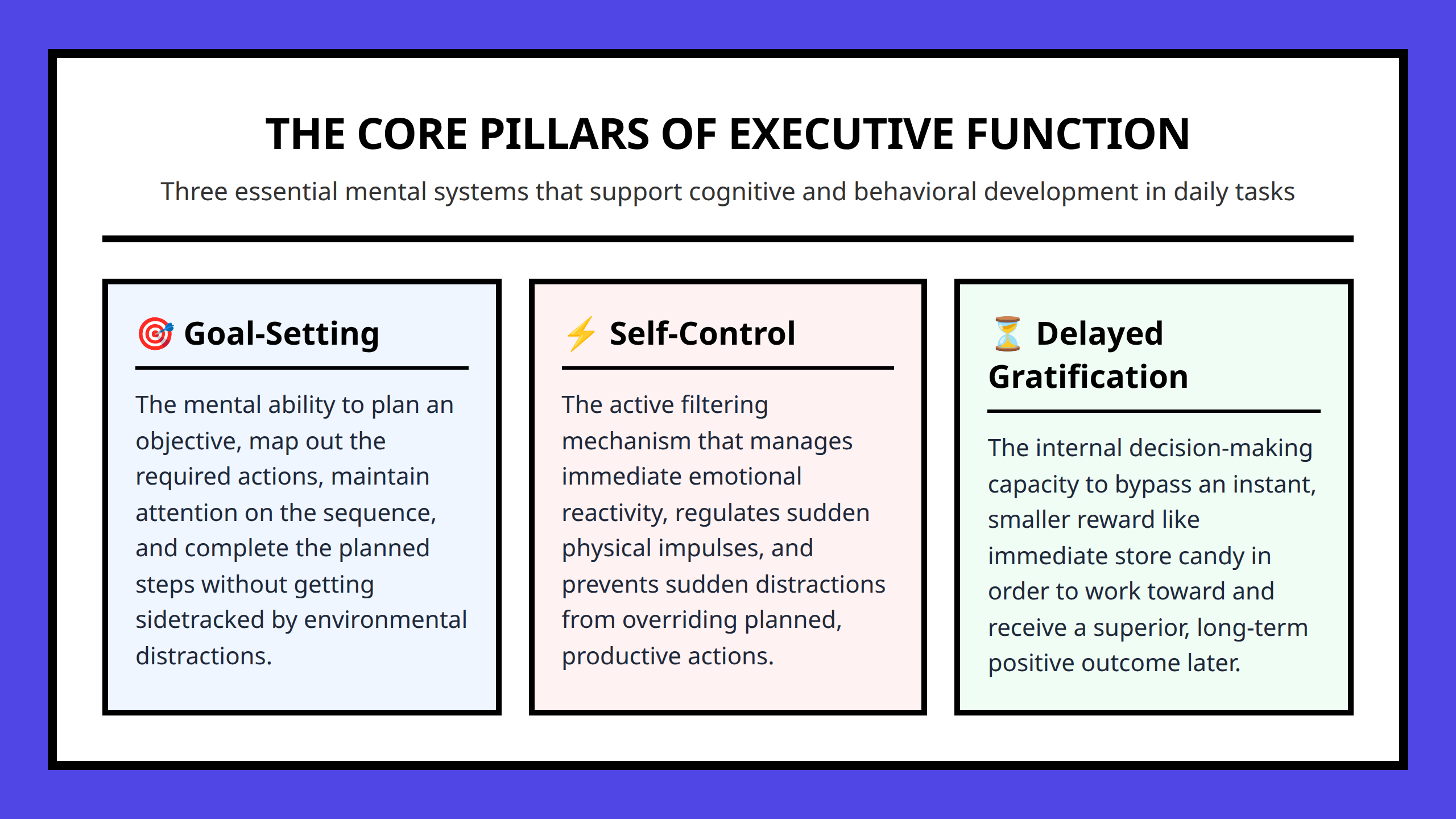
Executive function can sound like a technical term, but in real life it shows up in very ordinary moments. It is the mental system that helps a child stop, think, and choose what to do next instead of reacting automatically.
At its core, executive function includes three major abilities: self-control, goal management, and delayed gratification. Self-control is the ability to pause before acting. Goal management is the ability to plan and follow steps toward an outcome. Delayed gratification is the ability to wait for a better reward instead of grabbing an immediate one.
For example, a child with stronger executive function might be able to sit down, start homework, and finish it in steps. A child with weaker executive function may sit down but quickly lose focus, get frustrated, or shift to something more immediately rewarding like a game or video.
These differences are not about intelligence or effort. They are about the brain’s ability to manage competing impulses in real time. When that system is still developing, even simple routines can feel overwhelming.
In daily life, executive function shows up during transitions (“stop playing and get ready for bed”), during emotional stress (“I’m frustrated but I need to stay calm”), and during goal-based tasks (“I need to finish this before I can go outside”).
When this system is weak or inconsistent, children often rely on what works fastest in the moment—emotion, impulse, or avoidance—rather than planned action.
The Science of Delayed Gratification and Behavior
Delayed gratification is one of the clearest windows into executive function development. It reflects a child’s ability to wait for a better outcome instead of choosing immediate satisfaction.
One well-known way this has been studied is through simple choice experiments where children are offered a small reward immediately or a larger reward if they wait. Some children can wait by using distraction or self-control strategies, while others struggle and choose the immediate reward.
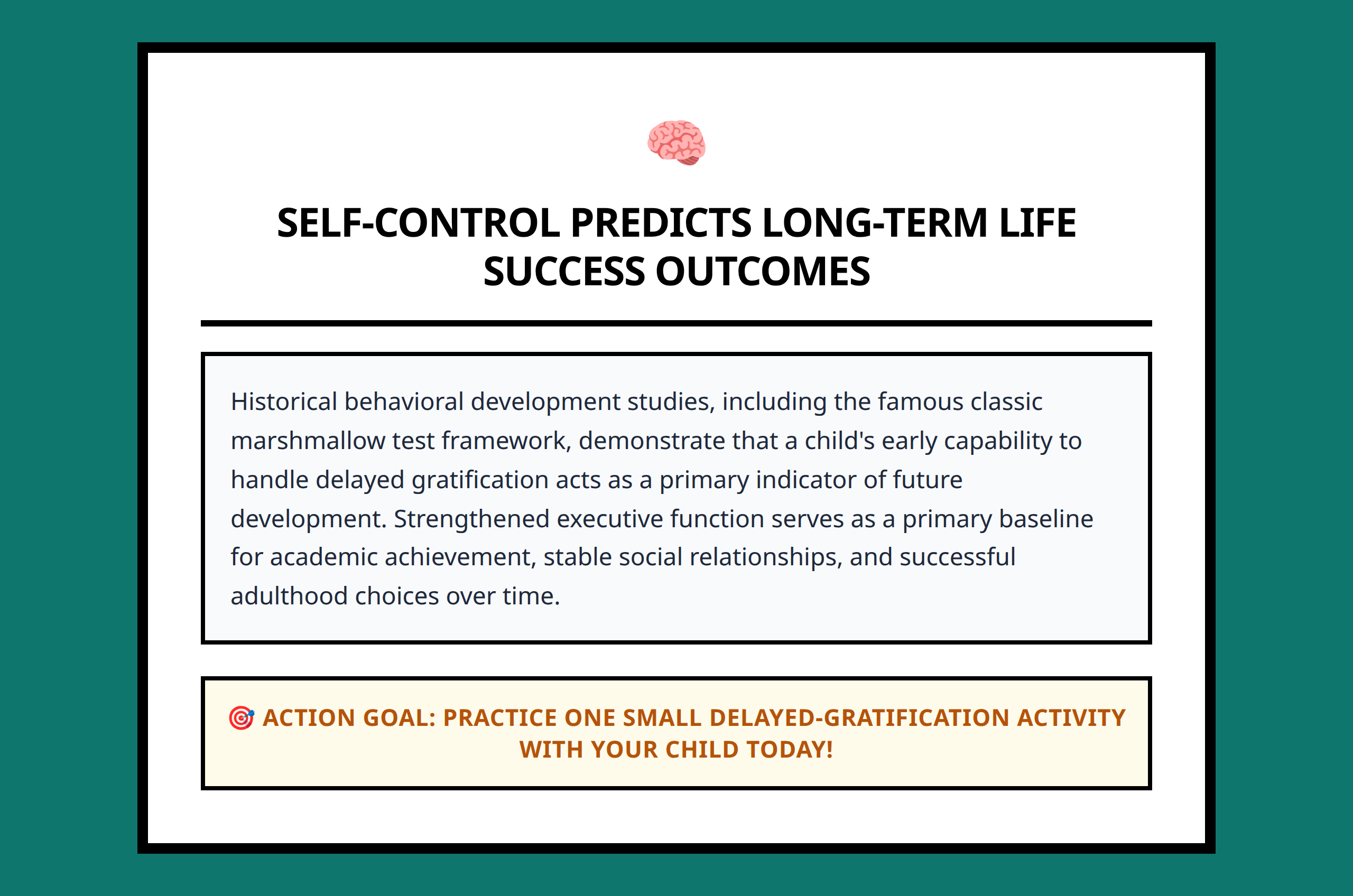
Over time, follow-up observations of these children have shown that early ability to delay gratification is linked with later life outcomes in areas like academic performance, emotional regulation, and decision-making. The important insight is not that one choice determines destiny, but that early self-control skills tend to reflect broader patterns of executive function development.
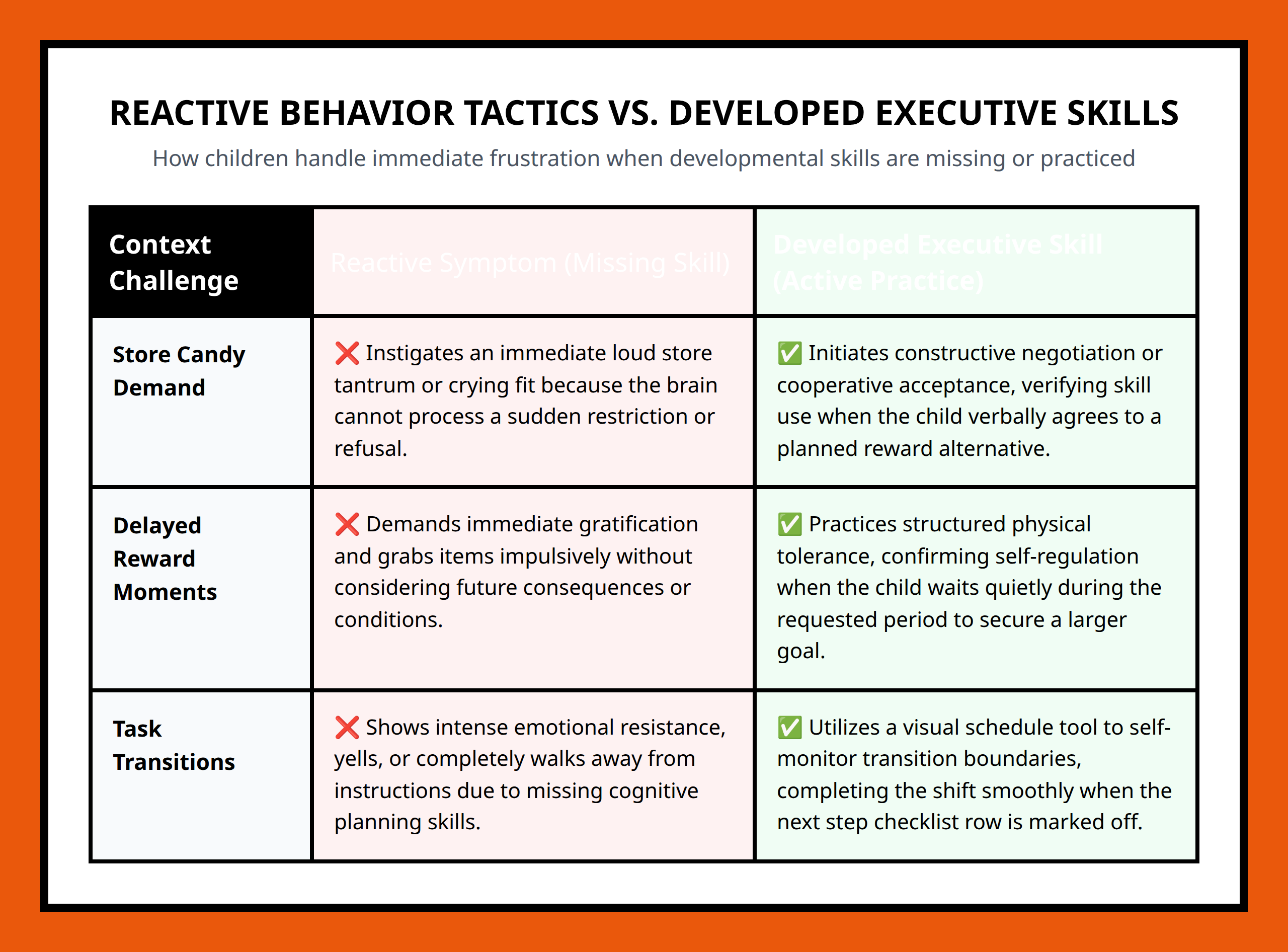
In everyday parenting, this looks much simpler. Imagine a child in a store who wants candy. One child might say, “Can I have it now?” and accept “no” after a short explanation. Another child might immediately escalate into a tantrum because waiting or accepting refusal feels unbearable in the moment.
In that situation, the tantrum is not just misbehavior—it is a substitute for a missing skill. The child is not yet able to regulate the emotional discomfort of waiting or disappointment in a flexible way.
Educational media has even tried to model this concept for children. In one well-known example, a playful character struggles with wanting something immediately but learns to pause and wait. These kinds of demonstrations help children see self-control as something that can be practiced rather than something you either have or don’t have.
How ADHD Impacts Executive Function Development
ADHD is closely tied to differences in how executive function develops and operates. Children with ADHD often know what they are supposed to do, but struggle to consistently regulate attention, behavior, and emotional responses in real time.
This is why traditional discipline methods sometimes fail. A child may understand a rule but still be unable to follow it when impulse, emotion, or distraction takes over. The gap is not in understanding—it is in execution.
For example, during homework time, a child may start with good intentions but quickly become overwhelmed by the effort required. Instead of breaking the task into steps, they may avoid it, argue, or shut down emotionally. What looks like refusal is often an attempt to escape frustration.
Similarly, in conflict situations, children with weaker executive function often replace skill-based responses with behavior. Instead of negotiating (“Can I have five more minutes?”), they may cry, shout, or refuse entirely because those responses require less cognitive control.
Over time, this pattern can create cycles at home. Parents may reduce demands to avoid conflict, and children may rely even more on reactive behavior because it continues to “work” in getting short-term relief. This cycle does not build skill—it reinforces avoidance.
It is also important to understand that ADHD-related executive function challenges are not rare. Large-scale observations suggest that a significant portion of children experience measurable difficulties with attention and behavioral regulation, and many receive support or intervention during development.
The key takeaway is that these behaviors are not simply discipline issues. They are skill-development gaps that require practice, structure, and support over time.
Strategies to Strengthen Executive Function in Daily Life
Executive function skills can develop with consistent practice. The goal is not to eliminate struggle immediately but to gradually build the child’s ability to pause, reflect, and choose better responses.
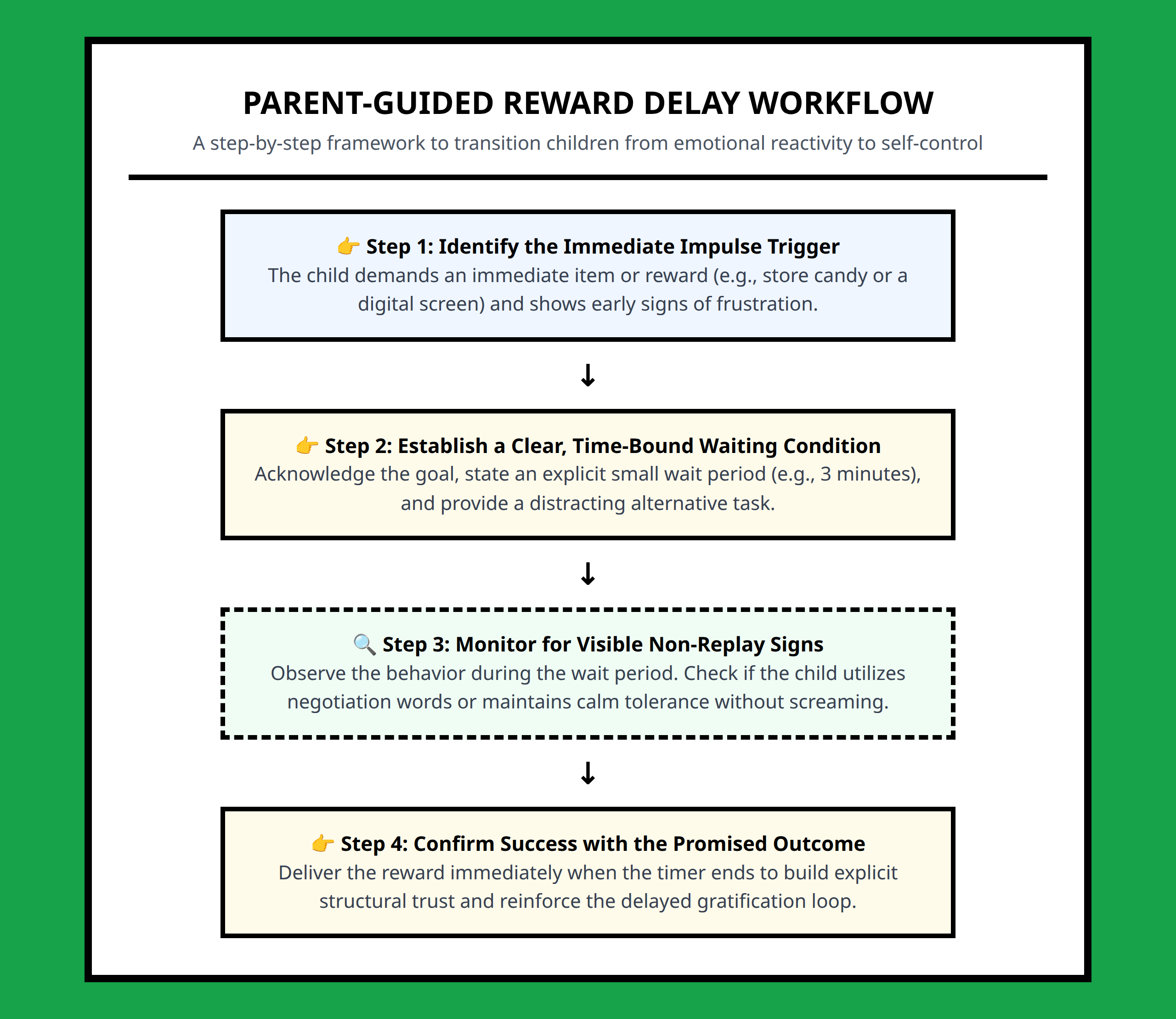
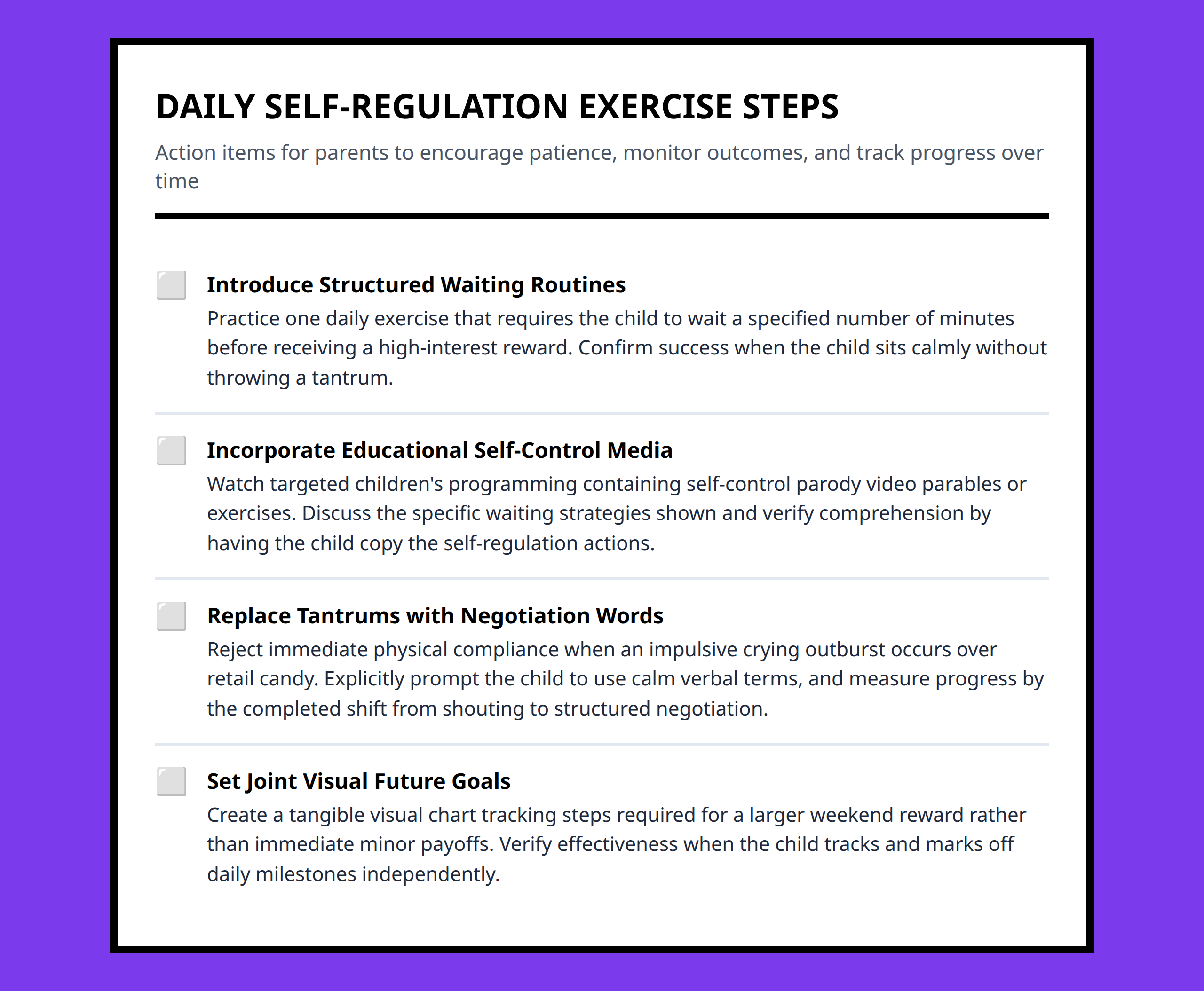
One of the most effective approaches is structured practice of waiting and decision-making. Instead of reacting in the moment, parents can create small, predictable opportunities for children to exercise self-control in safe situations.
For example, during snack time, a parent might say, “You can have this now, or you can wait five minutes and choose something else after.” The key is not the reward itself, but the act of waiting and managing the urge to act immediately.
Another approach is breaking tasks into manageable steps. Instead of saying “clean your room,” a parent might guide the child through one step at a time: pick up clothes first, then books, then toys. This reduces cognitive overload and supports goal completion.
Guidance and modeling also matter. Children learn self-regulation partly by observing how adults handle frustration. When adults stay calm, narrate their thinking, and show patience, they are indirectly teaching executive function skills.
Even simple routines can become training moments. A consistent bedtime routine, a structured homework window, or a predictable screen-time transition can all serve as practice environments for self-control and planning.
One important shift for parents is to stop seeing these moments as only behavior problems and start seeing them as skill-building opportunities. The focus moves from “How do I stop this behavior?” to “What skill is missing here, and how can it be practiced?”
FAQ
Key Terms Explained
- Executive Function: A set of mental skills that includes self-control, planning, attention regulation, and goal management.
- Delayed Gratification: The ability to wait for a larger or better reward instead of choosing an immediate one.
- Impulse Control: The ability to pause before acting on immediate urges or emotions.
- Self-Regulation: The ability to manage emotions, behavior, and attention in different situations.
- Cognitive Development: The process through which thinking, reasoning, and decision-making skills grow over time.
Executive function is not fixed at birth—it is shaped through repeated experiences of guidance, structure, and practice. The next time a child struggles with waiting or frustration, the most useful question is not “Why are they misbehaving?” but “What skill are they still learning here?”
References:
- https://www.simplypsychology.org/delayed-gratification-adhd.html
- https://pmc.ncbi.nlm.nih.gov/articles/PMC11519580/
- https://www.russellbarkley.org/factsheets/ADHD_EF_and_SR.pdf
- https://nfil.net/neurodiversity/understanding-delayed-gratification-with-ef-disorders/
- https://www.yellowserenity.com/understanding-delayed-gratification-and-adhd-why-its-challenging-and-how-to-overcome-it/
- https://link.springer.com/article/10.1007/s12152-020-09439-3
- https://childmind.org/article/adhd-and-executive-function/
- https://www.additudemag.com/emotional-regulation-adhd-kids-strategies/
- https://digitalshowcase.lynchburg.edu/cgi/viewcontent.cgi
- https://www.sandstonecare.com/blog/delayed-gratification/
