Affective connection helps parents build strong support networks through empathy, encouragement, care, and emotional understanding. These emotional exchanges do more than make people feel better—they help create and sustain the relationships that support family life.
When people talk about parenting communities, they often focus on advice, recommendations, and information. Those things matter. But what I find easy to overlook is that many parents stay connected to communities because of how those communities make them feel.
A supportive message during a difficult week, a moment of reassurance after a stressful experience, or simple recognition from someone who understands can have a lasting impact. Emotional connection is not separate from support. In many cases, it is the reason support works at all.
Takeaways
- Affective connection develops through emotions, care, empathy, and expressions of support.
- Emotional communication helps create and maintain strong parenting relationships.
- People often remember feeling understood long after they forget specific advice.
- Support networks grow stronger when members acknowledge emotions as well as practical concerns.
- Both online and offline interactions can create meaningful emotional bonds.
What Is Affective Connection?

Affective connection forms when emotions, feelings, attitudes, and expressions of care create and strengthen social bonds.
In parenting communities, affective connection appears whenever people encourage one another, express empathy, offer reassurance, celebrate successes, or provide comfort during difficult moments. These emotional exchanges help transform ordinary interactions into meaningful relationships.
What makes affective connection important is that it focuses on how people relate to one another emotionally rather than simply what information they exchange. Advice may solve a problem, but emotional support often helps people feel capable of facing that problem.
A parent who receives a message saying, “You’re not alone in this,” may gain something different from a parent who receives a list of recommendations. Both responses can be useful, but the emotional response strengthens the relationship itself.
How Emotional Support Creates Stronger Communities
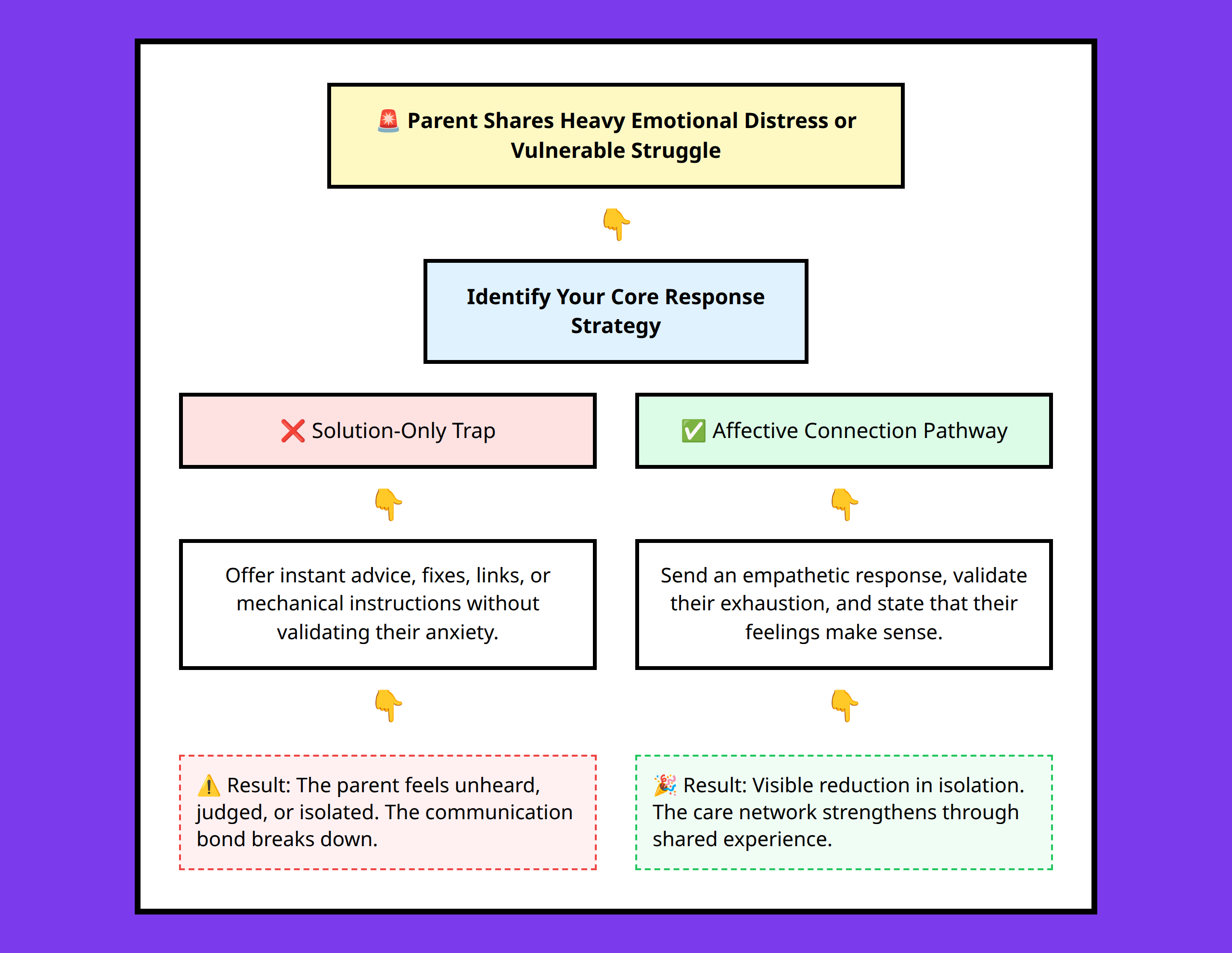
Communities become stronger when members feel cared for, understood, and valued.
Empathy is often at the center of this process. When people recognize and respond to another person’s feelings, trust begins to grow. Over time, those moments create social bonds that make communities more resilient and supportive.
Encouragement also plays an important role. Parenting can involve uncertainty, self-doubt, and emotional stress. A few supportive words may not change a situation, but they can change how a person experiences that situation.
An illustrative example might involve a parent sharing a difficult experience in a community discussion. Some people may offer practical suggestions, while others simply acknowledge the emotional weight of the situation. Often, both responses are valuable. The advice addresses the problem, while the empathy addresses the emotional experience.
Communities that consistently provide both kinds of support often develop stronger and more lasting relationships among their members.
Why Emotional Communication Matters in Parenting Networks
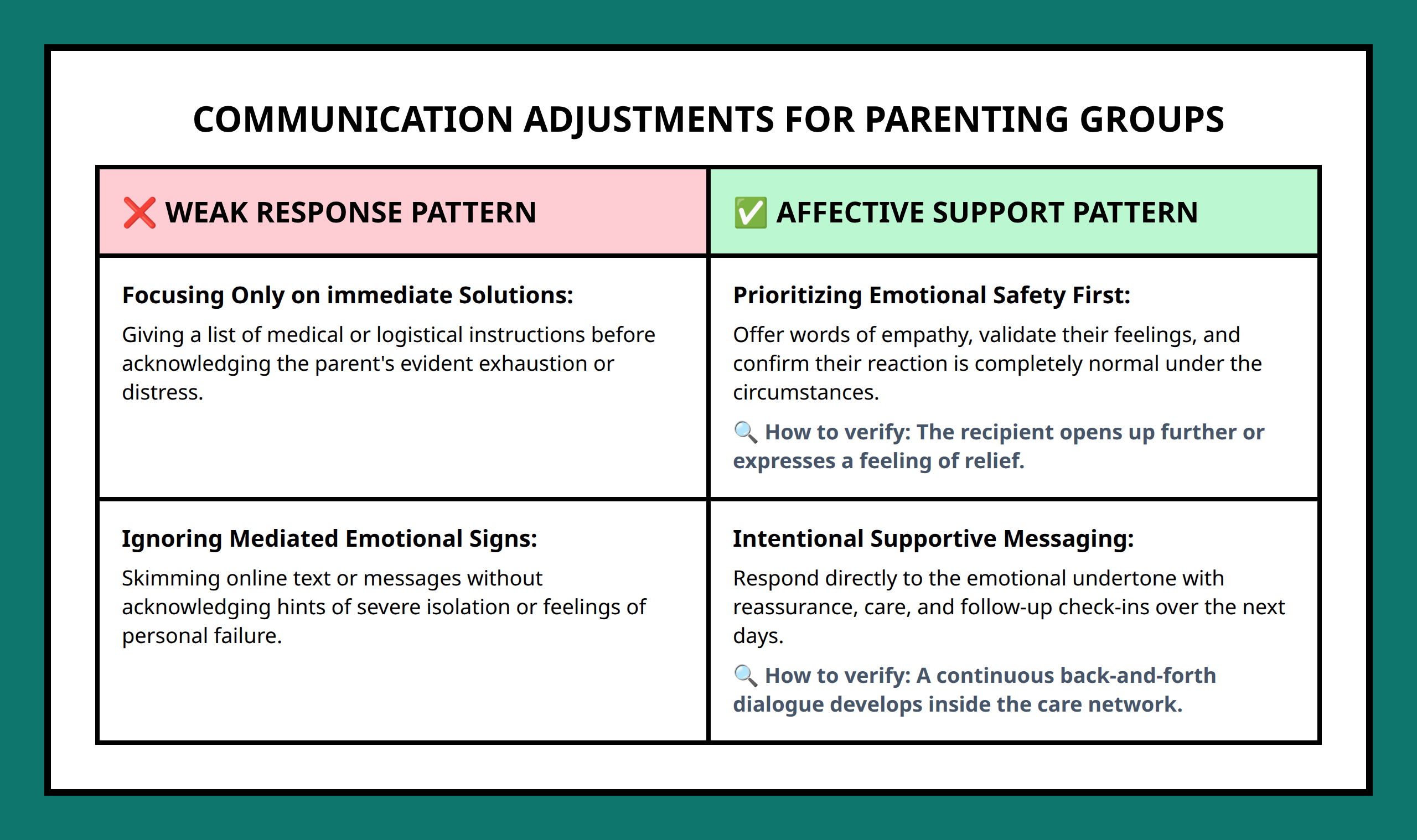
Emotional communication helps people maintain connections during both positive and difficult moments.
Expressions of care, affection, concern, and encouragement signal that relationships matter. These signals help create a sense of belonging that keeps people engaged in support networks over time.
One reason affective connection is so powerful is that it helps reduce feelings of isolation. Parents often face challenges that can feel deeply personal. Discovering that others understand those emotions can create comfort and connection even when solutions are not immediately available.
This emotional dimension also helps explain why many parenting relationships continue long after a specific question has been answered. The connection is not based only on information. It is based on feeling supported by others who care.
Common Mistakes in Emotional Support
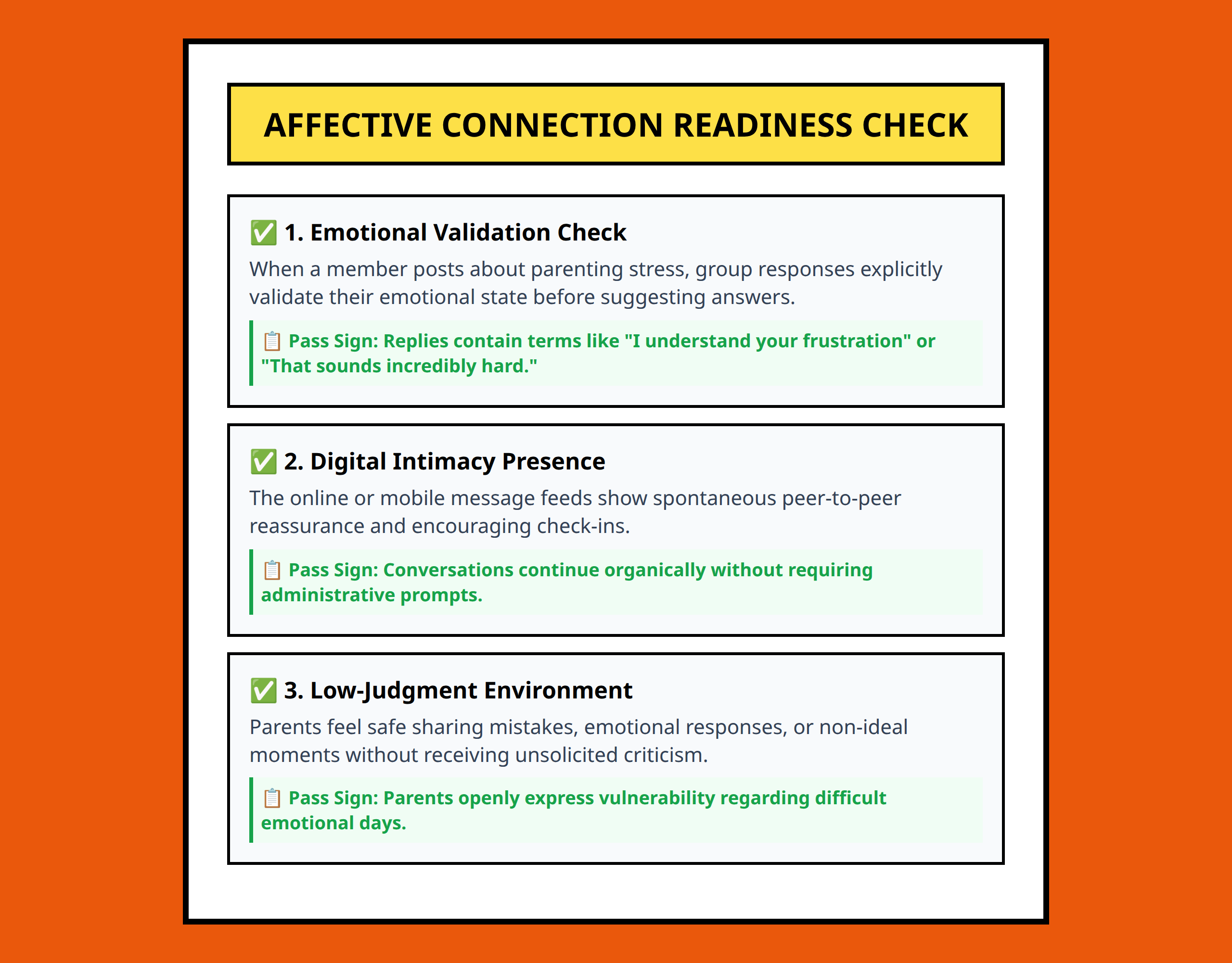
A common mistake is focusing entirely on solutions while ignoring emotional needs.
Many people naturally want to fix problems. When someone shares a difficult experience, the first instinct may be to offer advice. While practical guidance can be helpful, it does not always address what the person needs most in that moment.
Sometimes people need acknowledgment before they need answers. They want their feelings recognized and understood before moving into problem-solving.
Another mistake is assuming emotional support requires perfect words. In reality, simple expressions of empathy and care are often enough. A thoughtful response does not need to solve a problem to be meaningful.
Strong support networks recognize that emotional communication and practical guidance are complementary rather than competing forms of support.
Building Stronger Affective Connections

Intentional emotional communication helps relationships become stronger over time.
People can strengthen affective connection by listening carefully, responding with empathy, acknowledging emotions, and expressing genuine care. Small interactions often matter more than dramatic gestures.
A supportive message, a check-in during a difficult period, or recognition of someone’s effort can reinforce a relationship and strengthen a community. These actions may appear simple, but they help create the emotional foundation that allows support networks to thrive.
What stands out to me is that affective connection is not an optional extra layered on top of parenting communities. It is one of the core mechanisms that helps those communities exist in the first place.
FAQ
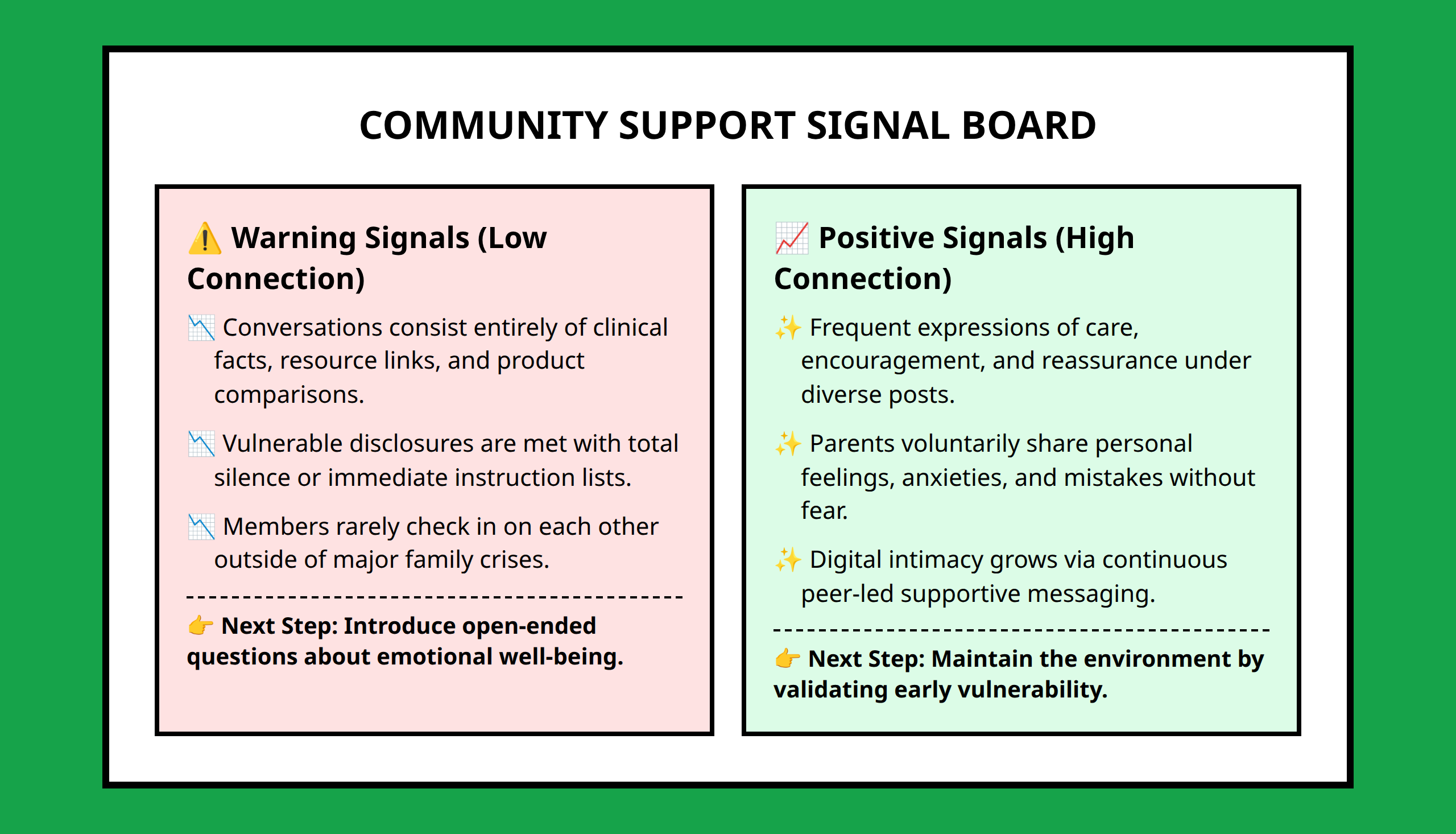
The strongest parenting networks are rarely built on information alone. They are built on people feeling understood, supported, and valued. A practical next step is to think about one person in your support network and send a simple message of encouragement. Small acts of care often become the foundation of lasting connections.
- Affective Connection: A form of connection built through emotions, empathy, care, affection, and emotional support.
- Emotional Support: Encouragement, understanding, reassurance, or comfort offered to another person.
- Empathy: The ability to recognize, understand, and respond to another person’s feelings.
- Support Network: A group of relationships that provides practical help, emotional support, or both.
- Mediated Communication: Communication that occurs through technology such as messaging platforms, online groups, or digital networks.
References:
- https://pmc.ncbi.nlm.nih.gov/articles/PMC11513346/
- https://www.sciencedirect.com/science/article/pii/S2214139126000892
- https://www.advancedtherapyclinic.com/blog/providing-emotional-support-through-counseling-for-families
- https://raisingchildren.net.au/grown-ups/family-life/routines-rituals-relationships/strong-families
- https://www.mdpi.com/2076-0760/14/6/371
- https://www.kidsfirstservices.com/first-insights/why-emotional-support-is-crucial-for-your-child-s-development
- https://www.frontiersin.org/journals/psychology/articles/10.3389/fpsyg.2026.1709744/full
- https://www.zaidimd.com/how-does-family-influence-mental-and-emotional-health/
- https://rsisinternational.org/journals/ijriss/articles/the-role-of-family-communication-and-parenting-on-childrens-social-behavior/
- https://henrico.gov/assets/5-Families-First-Affective-Involvement-350-095.pdf
- https://nurturescienceprogram.org/emotional-connection/
- https://preventionboard.wi.gov/Pages/OurApproach/ProtectiveFactors.aspx
