Connected parenting is more than parents using social media. It is a way of understanding how family life, support, knowledge, and emotional connection are increasingly built through ongoing relationships with friends, relatives, communities, and digital networks.
I think one of the easiest mistakes to make when looking at parenting communities is assuming they are mainly about information. A parent joins a group, asks a question, gets an answer, and moves on.
In reality, something much deeper is often happening. Parents build support systems, exchange knowledge, and develop meaningful emotional bonds that shape how they experience family life itself. Understanding this broader picture helps explain why digital relationships have become such an important part of modern parenting.
Takeaways
- Connected parenting is built through relationships, not technology alone.
- Shared experiences help parents feel less isolated and more supported.
- Knowledge often develops through ongoing exchanges between parents, not only through formal experts.
- Emotional support is a central part of parenting networks, not an optional extra.
- Family practices can extend beyond the household to include communities, friends, and support groups.
What Is Connected Parenting?
Connected parenting is the practice of building, maintaining, and negotiating parenting and family life through ongoing connections with other people.
These connections may happen through digital platforms such as messaging apps, social networks, online groups, and discussion forums. They may also happen through phone calls, face-to-face conversations, or other forms of communication. The important point is not the technology itself. The important point is the relationship.
Connected parenting views family life as something people actively do rather than something defined only by household structure. Parenting decisions, support systems, caregiving practices, and everyday family experiences are often influenced by interactions with a wider network of people.
Consider a simple example. A parent facing a difficult decision about school, behavior, or family routines may reach out to trusted contacts for advice. Another parent may turn to a community that understands their particular circumstances. These interactions do more than solve immediate problems. They become part of how family life is organized and experienced.
In this framework, family practices include everyday actions such as caring for children, sharing support, maintaining close relationships, checking in on others, and helping people navigate challenges. These practices often stretch beyond the traditional boundaries of the household.
The Three Dimensions of Connected Parenting

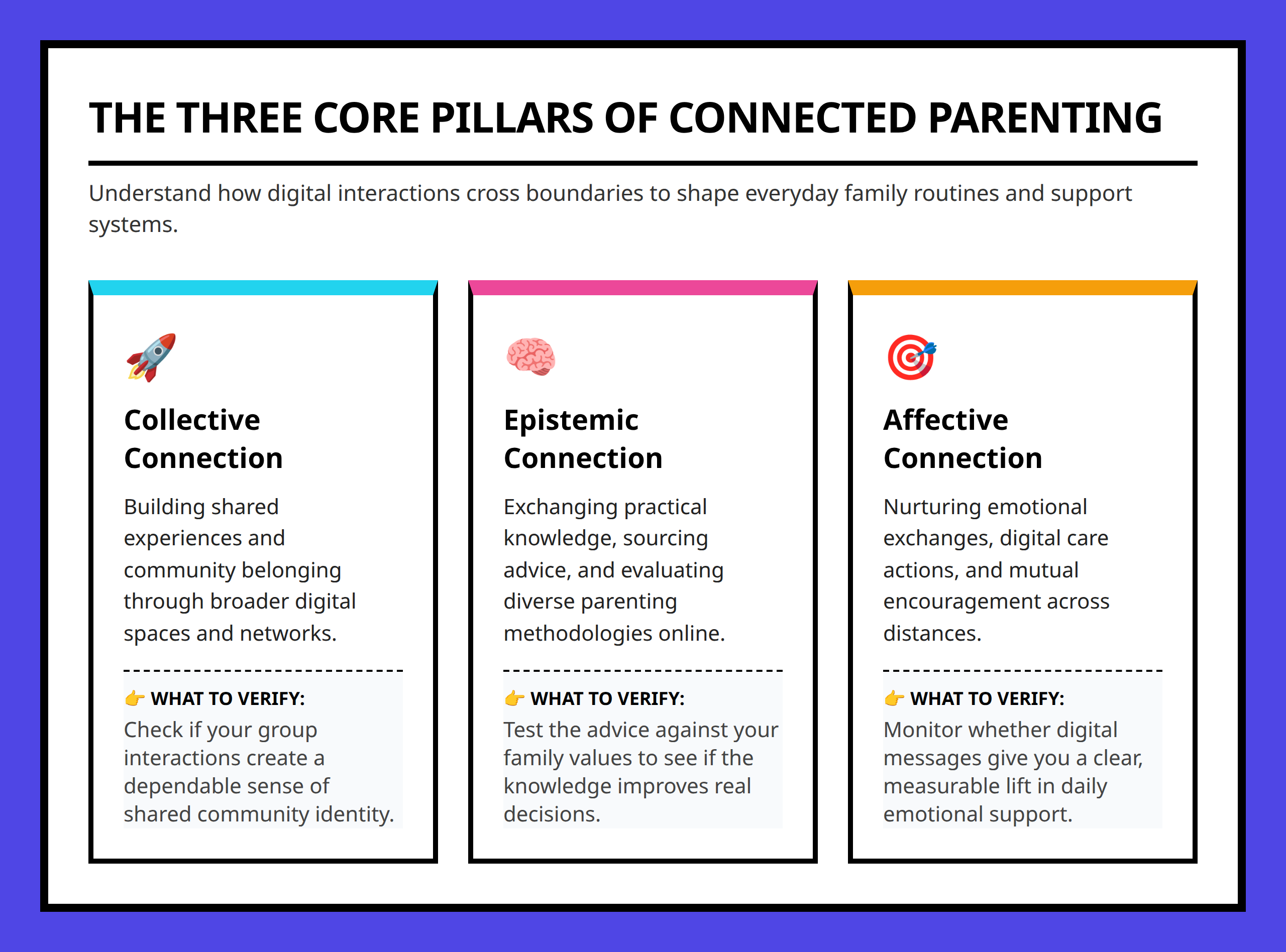
Connected parenting operates through three overlapping dimensions: collective connection, epistemic connection, and affective connection.
These dimensions can be examined separately, but they frequently work together in everyday life.
| Dimension | Primary Focus | Typical Outcome |
|---|---|---|
| Collective Connection | Shared experiences and belonging | Community and mutual support |
| Epistemic Connection | Knowledge and information exchange | Learning and practical guidance |
| Affective Connection | Emotions and care | Trust, encouragement, and closeness |
Collective Connection
Collective connection develops when parents recognize common experiences and circumstances.
Many parenting communities are built around the feeling that others understand what life is actually like. Shared experiences create a sense of belonging that reduces isolation and encourages participation.
A parent might seek out others facing similar family circumstances because they do not want to explain every detail of their situation from the beginning. The shared understanding itself becomes valuable.
In practical terms, collective connection often appears through discussions about similar parenting experiences, requests for others to share comparable situations, and conversations that emphasize common challenges rather than individual differences.
Epistemic Connection
Epistemic connection centers on knowledge, learning, and information exchange.
Parents frequently build expertise through conversations with others who have faced similar situations. Practical knowledge is shared through recommendations, explanations, observations, and personal experiences.
What makes this interesting is that expertise is often collaborative. Parents may learn from professionals, but they also learn from each other. Communities become places where information is tested, discussed, questioned, and refined.
An ordinary example might involve a parent seeking advice about a challenge at home. Rather than receiving a single answer, they may gather multiple perspectives and use those perspectives to make a more informed decision.
Affective Connection
Affective connection is built through emotions, feelings, attitudes, and expressions of care.
Parenting can be emotionally demanding. Encouragement, empathy, reassurance, and understanding often become just as important as practical advice.
Simple acts such as offering support, expressing concern, acknowledging frustration, or celebrating successes help create social bonds that strengthen communities over time.
When people describe a parenting group as supportive, they are often describing affective connection. The relationship matters because members feel understood, valued, and cared for.
How Family Practices Extend Beyond Traditional Family Boundaries
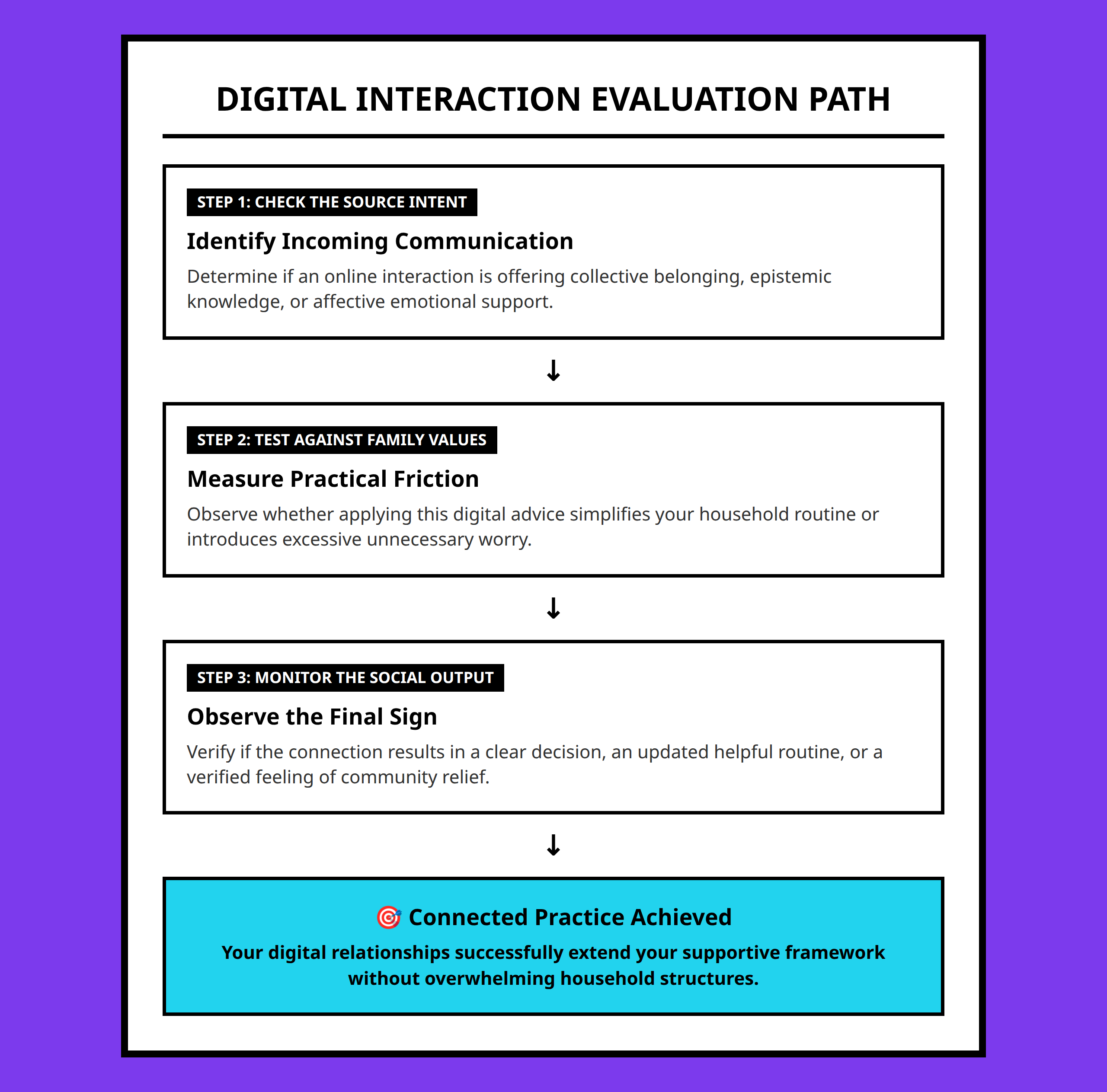
One of the most important ideas in connected parenting is that family life often extends beyond the immediate household.
Family practices can include actions that take place between parents and children, but they can also include caring relationships with friends, extended family members, support groups, and communities.
This broader perspective helps explain why many parents rely on networks that may not fit traditional ideas of family. Some people receive practical help from community groups. Others depend on close friendships for emotional support. Still others maintain strong ties with people who share similar parenting experiences.
Imagine a parent facing a difficult week. They may receive advice from one person, encouragement from another, and practical suggestions from a group conversation. Each interaction contributes something different, yet all become part of the support system that helps them navigate family life.
This is why connected parenting should not be reduced to social media use. The deeper story is about how relationships create resources that help people care for themselves, their children, and the people around them.
Why Connected Parenting Matters Today

The value of connected parenting lies in its ability to bring together community, knowledge, and care.
Modern families often face challenges that cannot be solved alone. Parents look for understanding, guidance, and emotional support. Connected parenting provides a framework for understanding how these needs are met through networks of relationships.
What I find most useful about this framework is that it shifts attention away from technology itself. Instead of asking which platform matters most, it asks how people use relationships to support family life.
That perspective is often far more revealing.
FAQ

The most useful way to think about connected parenting is as a combination of community, learning, and care. The technology involved may change over time, but the relationships remain central. If you want to better understand your own parenting network, start by asking a simple question: who do you turn to for support, advice, and encouragement, and how do those relationships shape the way your family lives day to day?
- Connected Parenting: A framework that describes how parenting and family practices are built and maintained through relationships, connections, and communication.
- Family Practices: The everyday actions, routines, and forms of care that people use to create and maintain family life.
- Collective Connection: Connection based on shared experiences, common circumstances, and mutual understanding.
- Epistemic Connection: Connection formed through the exchange and development of knowledge, information, and expertise.
- Affective Connection: Connection built through emotions, care, encouragement, empathy, and emotional support.
- Mediated Communication: Communication that occurs through technologies such as messaging platforms, social networks, or other digital tools.
References:
- https://www.youtube.com/watch?v=VhWeLgk7BfI
- https://www.youtube.com/watch?v=C3w0PoUDJIc
- https://www.youtube.com/watch?v=xG7t08Xh7FI
- https://www.researchgate.net/publication/368376601_Connected_Parenting_Digital_Discourse_and_Diverse_Family_Practices
- https://english.hku.hk/event/458/23-Mar-2023
- https://pmc.ncbi.nlm.nih.gov/articles/PMC10131553/
- https://digitalmediatreatment.com/parent-child-relationship/
- https://medium.com/@zoeoluwaseun/modern-parenting-challenges-and-joys-in-the-digital-age-c1634a8a9087
- https://link.springer.com/article/10.1007/s10566-026-09940-5
- https://netpsychology.org/the-psychology-of-digital-parenting/
- https://www.handinhandparenting.org/2022/10/understanding-connected-parenting/
- https://bristoluniversitypressdigital.com/edcollchap-oa/book/9781529252644/ch001.xml
- https://askfilo.com/user-question-answers-smart-solutions/how-has-technology-affected-parent-child-relationship-3339313336393136
- https://premierscience.com/pjss-25-752/
- https://evergreenpsychotherapycenter.com/seek-connection-not-control-in-your-parenting-relationship/
