Collective connection grows when parents recognize that their experiences are shared rather than isolated. That sense of common understanding often becomes the foundation for stronger support networks, deeper belonging, and more practical help during challenging moments.
Many parents spend at least some time wondering whether they are the only person dealing with a particular challenge. A difficult conversation with a child, uncertainty about a family decision, or simply feeling overwhelmed can feel very personal and very lonely.
What interests me about collective connection is that it changes how people see those moments. Instead of viewing a challenge as an individual problem, parents begin to recognize that others have faced similar situations. That shift can transform isolation into community.
Takeaways
- Collective connection develops when parents recognize shared experiences and common challenges.
- Parenting communities often become valuable because members understand situations without lengthy explanations.
- A strong support network is built through ongoing participation, not just occasional advice requests.
- Shared experiences can create trust, empathy, and a sense of belonging.
- Both digital and offline communities can function as a practical support system for family life.
Understanding Collective Connection
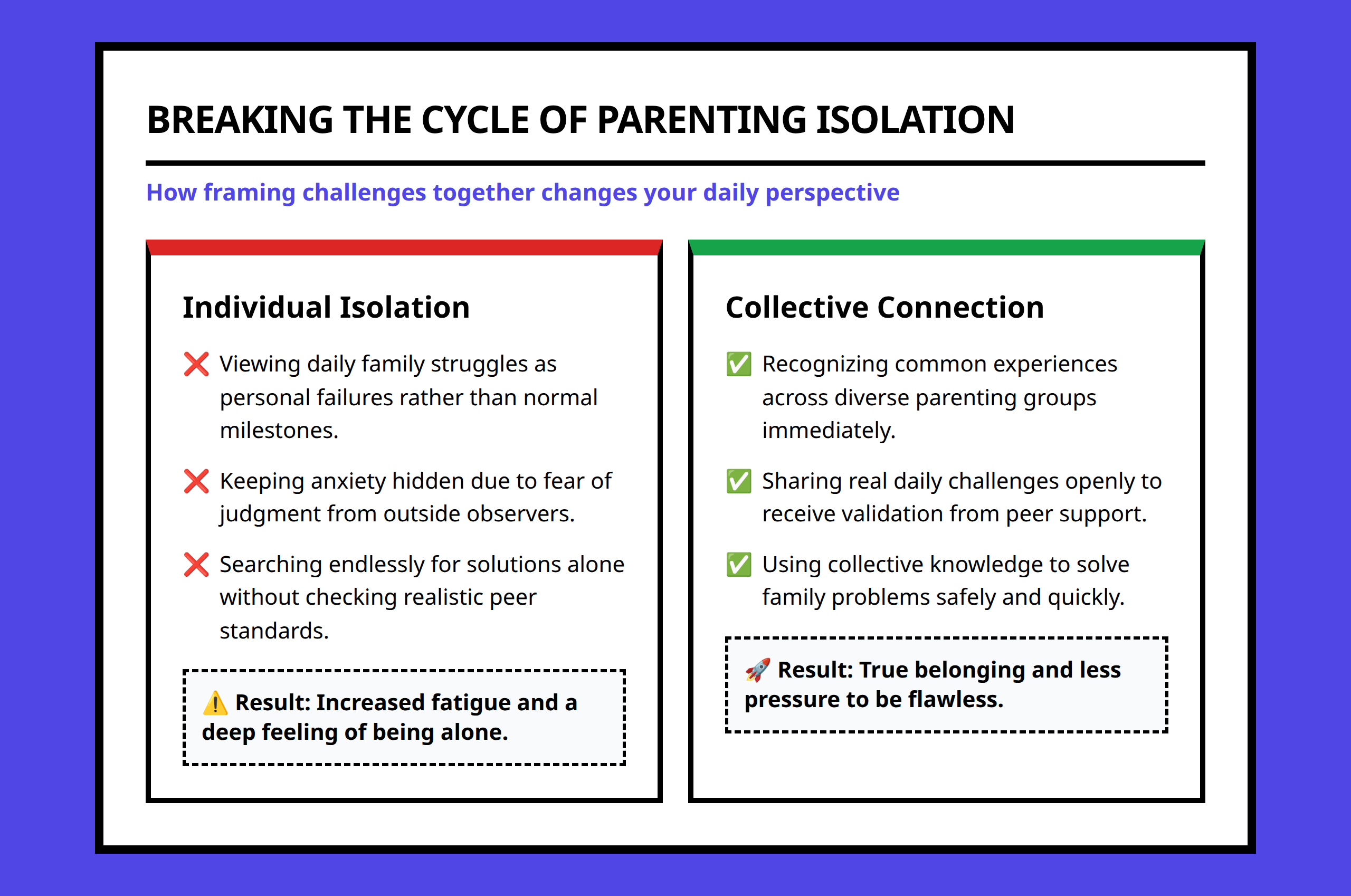
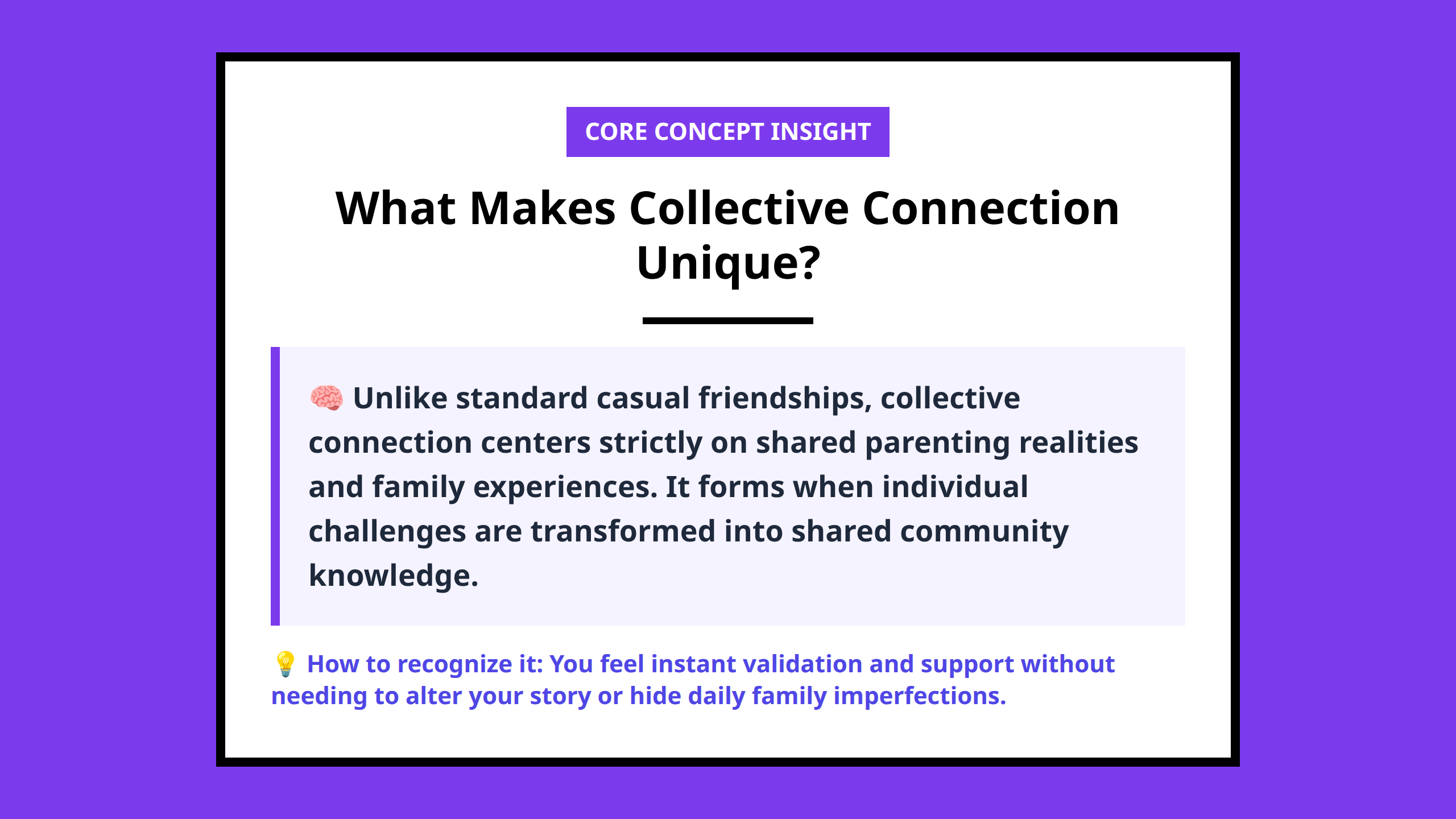
Collective connection is the process of creating relationships through shared experiences, circumstances, and family practices.
Rather than focusing only on individual stories, collective connection highlights what people have in common. Parents connect because they recognize familiar challenges, similar family situations, or comparable life experiences.
This shared understanding creates alignment. People feel seen because others recognize the realities they are facing. In many cases, the connection is strengthened by the simple feeling that someone else already understands the context.
One important feature of collective connection is that it often turns personal experiences into collective experiences. A parent may describe a difficult situation, and others respond by sharing similar stories. The discussion becomes less about one person’s problem and more about a shared reality.
That change can be surprisingly powerful. It replaces isolation with participation.
How Parenting Communities Become a Virtual Village
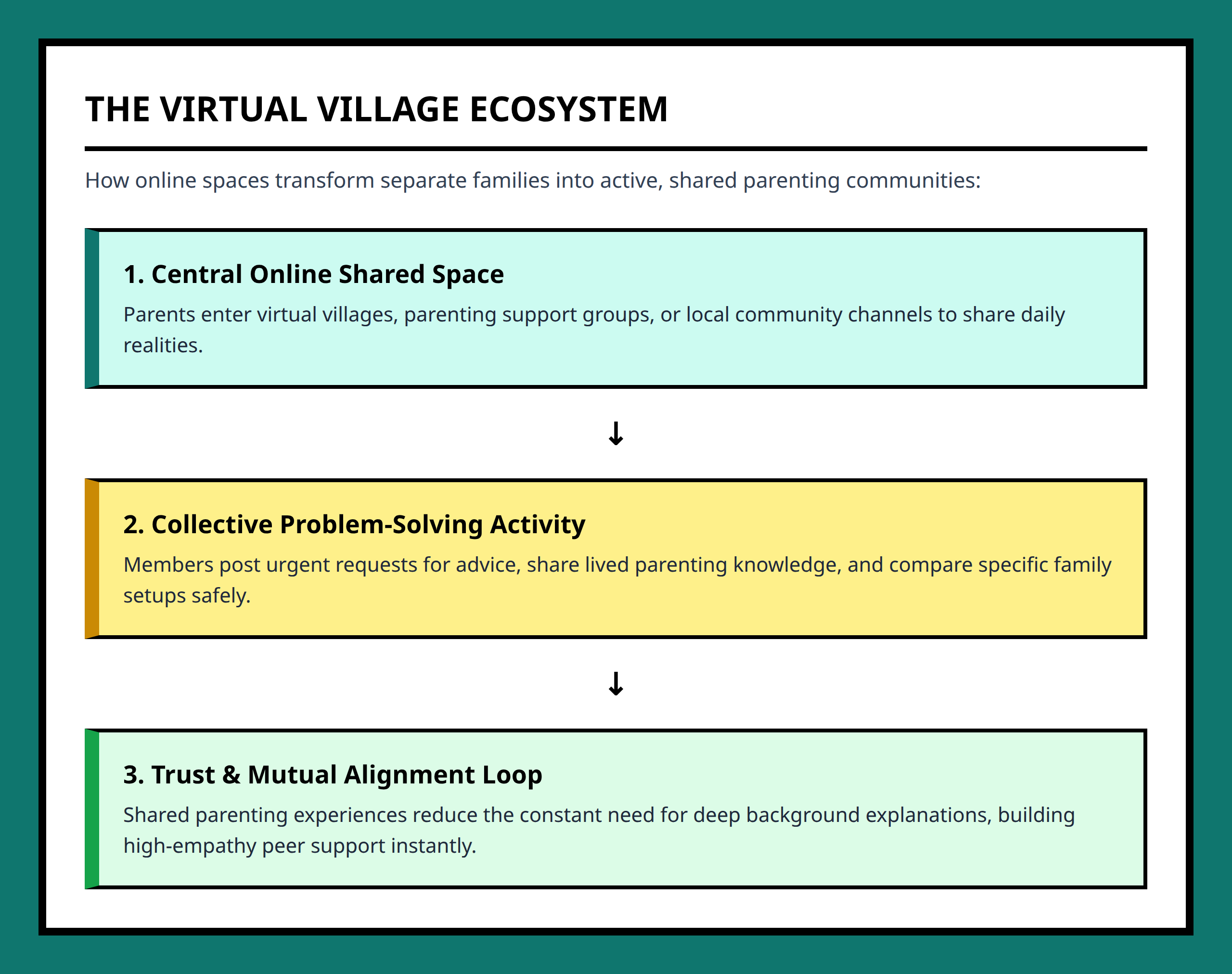
Many parenting communities function as modern versions of a village, providing support, advice, and encouragement across physical distance.
Parents frequently use groups, communities, and networks to ask questions, seek reassurance, compare experiences, and gather practical perspectives. These interactions create a form of collective parenting in which support extends beyond the immediate household.
What makes these communities valuable is not simply the exchange of information. Members often become invested in one another’s lives. They celebrate successes, help people navigate difficulties, and contribute to a shared pool of experience.
Imagine a parent facing an unfamiliar challenge at home. They post a question in a community made up of people with similar family experiences. Instead of receiving a single answer, they receive multiple perspectives, practical suggestions, and encouragement from people who genuinely understand the situation. The support comes from the community itself, not from any one individual.
This is one reason collective connection is often described as building a virtual village. The network becomes a place where people can rely on one another, even when they are physically far apart.
Why Shared Experience Creates Stronger Support
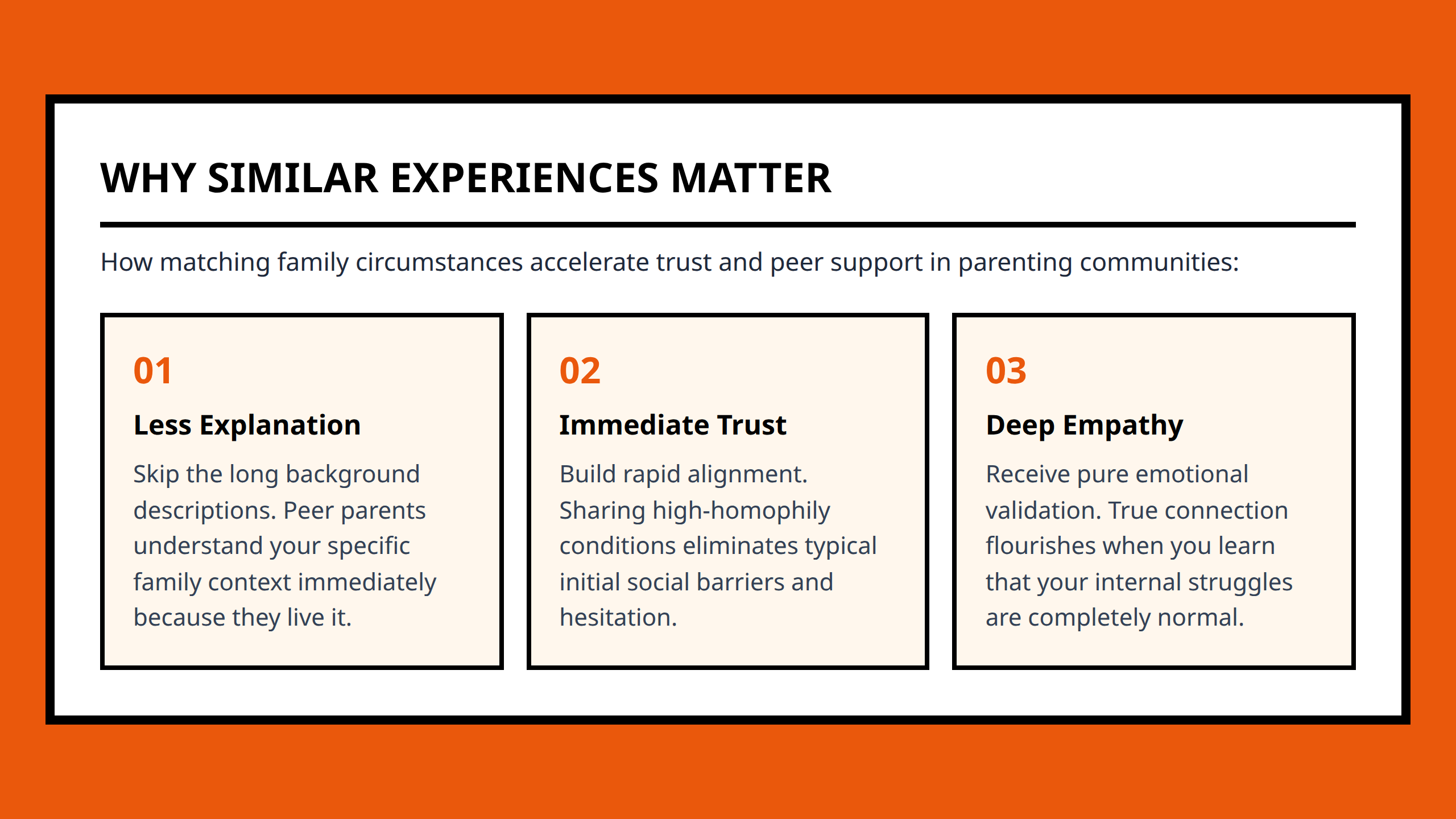
Shared experiences matter because they reduce distance between people.
When parents connect with others who have similar circumstances, they often spend less time explaining themselves and more time discussing what matters. A common background creates a foundation for trust and understanding.
In many communities, this shared perspective develops through similar family structures, parenting experiences, or life situations. The resulting sense of familiarity can make conversations feel safer and more productive.
There is also an emotional benefit. People often feel less alone when they discover that others have encountered similar obstacles. Even when a challenge remains difficult, knowing that it is shared can make it feel more manageable.
That does not mean everyone must have identical experiences. Collective connection is not about complete similarity. It is about finding enough common ground to create meaningful support and mutual understanding.
The Difference Between Advice and Collective Support
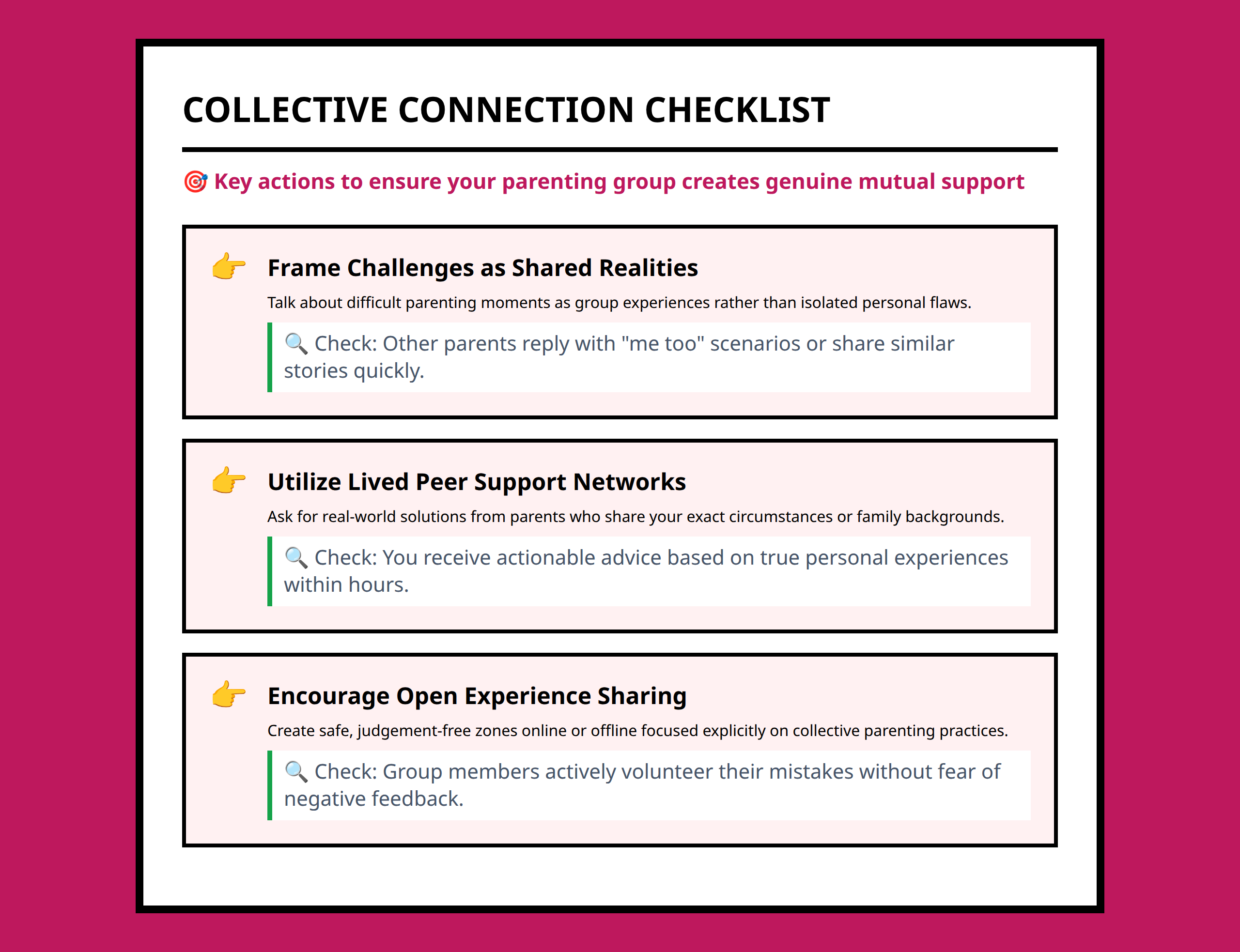
Advice can solve a problem, but collective support can change how a person experiences that problem.
A parent may ask a practical question and receive useful recommendations. That exchange is valuable. Yet collective connection often goes further because it provides perspective, empathy, and a sense of belonging alongside practical guidance.
For example, hearing that several other parents have faced a similar challenge may be just as important as receiving a solution. The knowledge that a struggle is shared often reduces anxiety and self-doubt.
This is why successful parenting communities are rarely built around information alone. They thrive because people contribute experiences, encouragement, and mutual support in addition to advice.
Recognizing Collective Connection in Everyday Life
You do not need a large online group to experience collective connection.
It can emerge in a local support group, a small messaging circle, a friendship network, or a broader parenting community. The key feature is not the size of the network but the presence of shared experiences and mutual support.
If you are looking for stronger support, one useful question is this: where do people openly discuss experiences that resemble your own? Communities often become meaningful when members feel comfortable sharing challenges as well as successes.
Shared experience is rarely a complete solution to every parenting challenge. But it often provides the understanding and support that make those challenges easier to navigate.
FAQ

The strongest parenting communities are not necessarily the largest or most active. They are often the ones where people recognize themselves in one another’s experiences. If you want to build a stronger support network, start by finding a place where people can say, honestly and without judgment, “I’ve been through something like that too.”
- Collective Connection: A form of connection built through shared experiences, circumstances, and family practices.
- Collective Parenting: Parenting support that extends beyond an individual household through communities, networks, and relationships.
- Virtual Village: A support network, often maintained through digital communication, where people help one another through shared experiences.
- Peer Support: Assistance, encouragement, and understanding provided by people with similar experiences.
- Belonging: The feeling of being accepted, understood, and connected within a group or community.
References:
- https://familyfirstjournal.com/parenting/building-strong-family-connections-through-shared-experiences/
- https://peps.org/news-and-resources/the-power-of-parent-to-parent-connections
- https://postpartum.net/the-power-of-building-a-supportive-community-in-parenthood/
- https://strengthening-families.net/community-connections-and-circles-of-support/
- https://www.thrivingfamiliesalliance.org/post/the-protective-factor-social-connections-provides-benefits-to-both-families-and-communities
- https://blog.trevecca.edu/thehill/the-power-of-shared-experiences
- https://fdna.com/health/resource-center/power-of-parent-networks-in-child-development/
- https://family-central.sg/news-articles/strengthen-family-bonds-through-shared-memories/
- https://www.henryford.com/blog/2025/07/how-to-build-a-parent-support-network
- https://www.stepaheadaba.com/blog/the-benefits-of-parent-support-groups-for-aba-families
- https://www.cliffsnotes.com/cliffs-questions/4096651
- https://www.pinotspalette.com/naperville/blog/creative-life/pinotspalettenaperville-how-do-shared-experiences-strengthen-relationships
- https://www.invent.org/blog/trends-stem/benefits-building-strong-connections
