ADHD behavior management strategies that rely only on rewards and punishments may change behavior in the short term, but they often fail to build the underlying skills children need—like self-control, communication, and emotional regulation.
Many parents discover this the hard way. A reward system works for a few days, then stops. A punishment system reduces one behavior, but another problem appears somewhere else. It can feel like the child is “unlearning” progress as fast as it is taught.
What’s often missing is not structure or discipline—but skill-building. Children with ADHD are not just struggling with behavior. They are often still developing core executive function skills that help them pause, think, and respond in more effective ways.
This article explains why behavior-only systems break down, how children unintentionally rely on behavior instead of skills, and what actually helps build long-term change.
Takeaways
- Rewards and punishments shape behavior, but they do not directly teach skills like communication or self-control.
- Many challenging behaviors are “skill substitutes” when children don’t yet have better tools.
- Repeated avoidance of conflict can accidentally reinforce the very behaviors parents want to reduce.
- Long-term progress comes from teaching replacement skills, not just controlling outcomes.
The Difference Between Behavior Control and Skill Development

Behavior control and skill development are often treated as the same thing, but they are very different. Behavior control focuses on what a child does in the moment. Skill development focuses on what a child can do independently in the future.
For example, a reward system might say, “If you finish homework, you get screen time.” This can improve compliance temporarily. But it does not necessarily teach the child how to start homework, manage frustration, or stay focused when tasks feel boring.
A child with stronger underlying skills might still complete homework even without rewards because they can manage attention and follow steps. A child without those skills may only complete tasks when external pressure or incentives are present.
This distinction matters because ADHD-related challenges are often rooted in executive function development. When systems only target behavior, they may miss the deeper issue: the child is still learning how to regulate attention, emotions, and impulses.
Why Children Use Behavior Instead of Skills
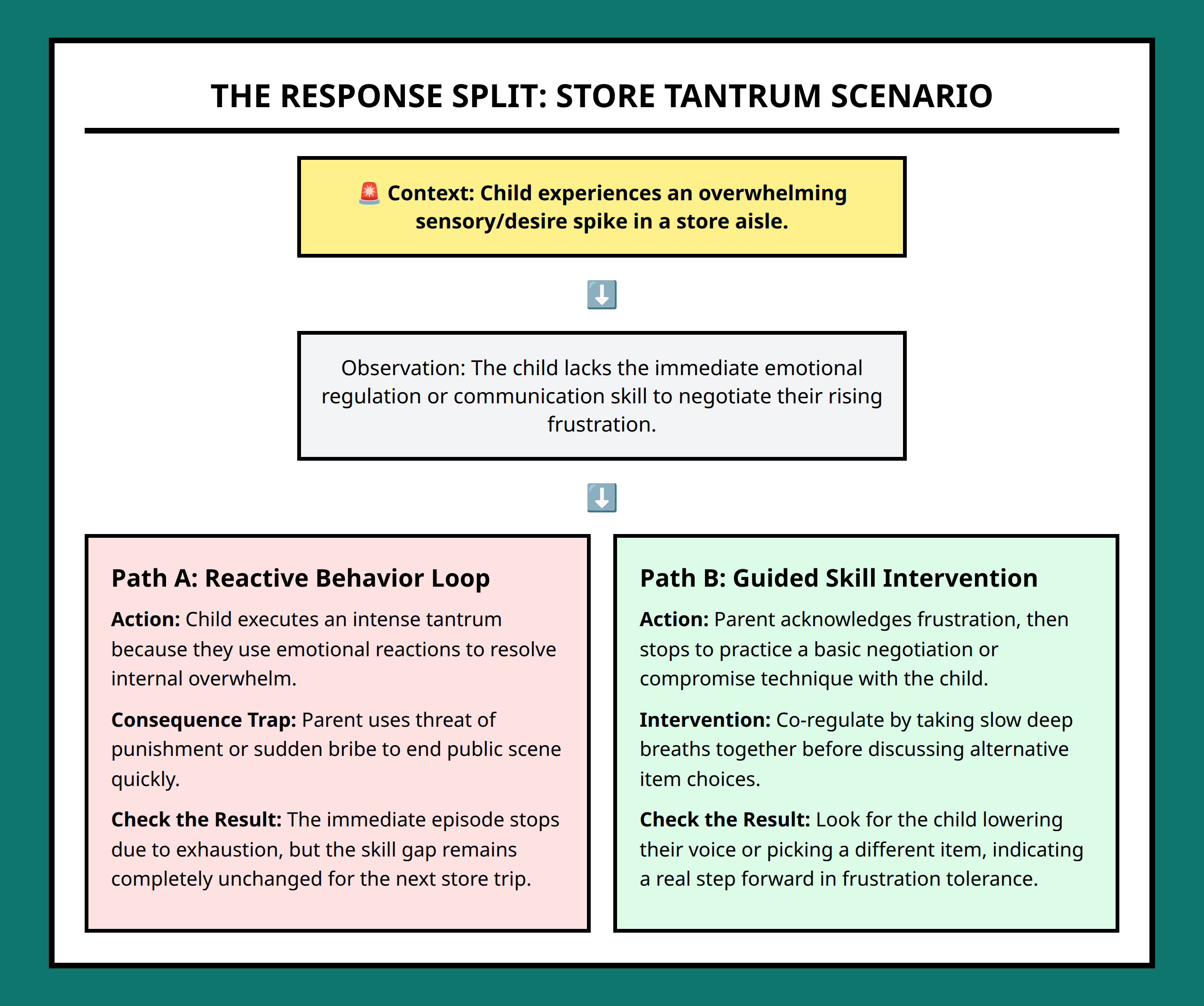
When children don’t yet have strong communication or self-regulation skills, they naturally fall back on behavior to solve problems. Behavior becomes a shortcut when skills are missing.
For example, imagine a child in a store who wants candy. One child might say, “Can I have it?” and accept a “no” after a short explanation. Another child might immediately cry, shout, or fall to the floor in a tantrum when told they cannot have it.
The tantrum is not simply “bad behavior.” It is often a replacement for missing skills. Instead of negotiating, waiting, or tolerating frustration, the child uses the fastest available strategy to express need and try to change the outcome.
This pattern shows up in many areas of daily life. Homework refusal, chore resistance, and screen-time transitions often trigger emotional reactions because the child does not yet have strong tools for managing discomfort or negotiating outcomes.
Over time, behavior becomes the default communication system. Instead of saying what they feel or need, the child acts it out. This is especially common in ADHD, where impulse control and emotional regulation are still developing.
The Hidden Risks of Over-Reliance on Consequences
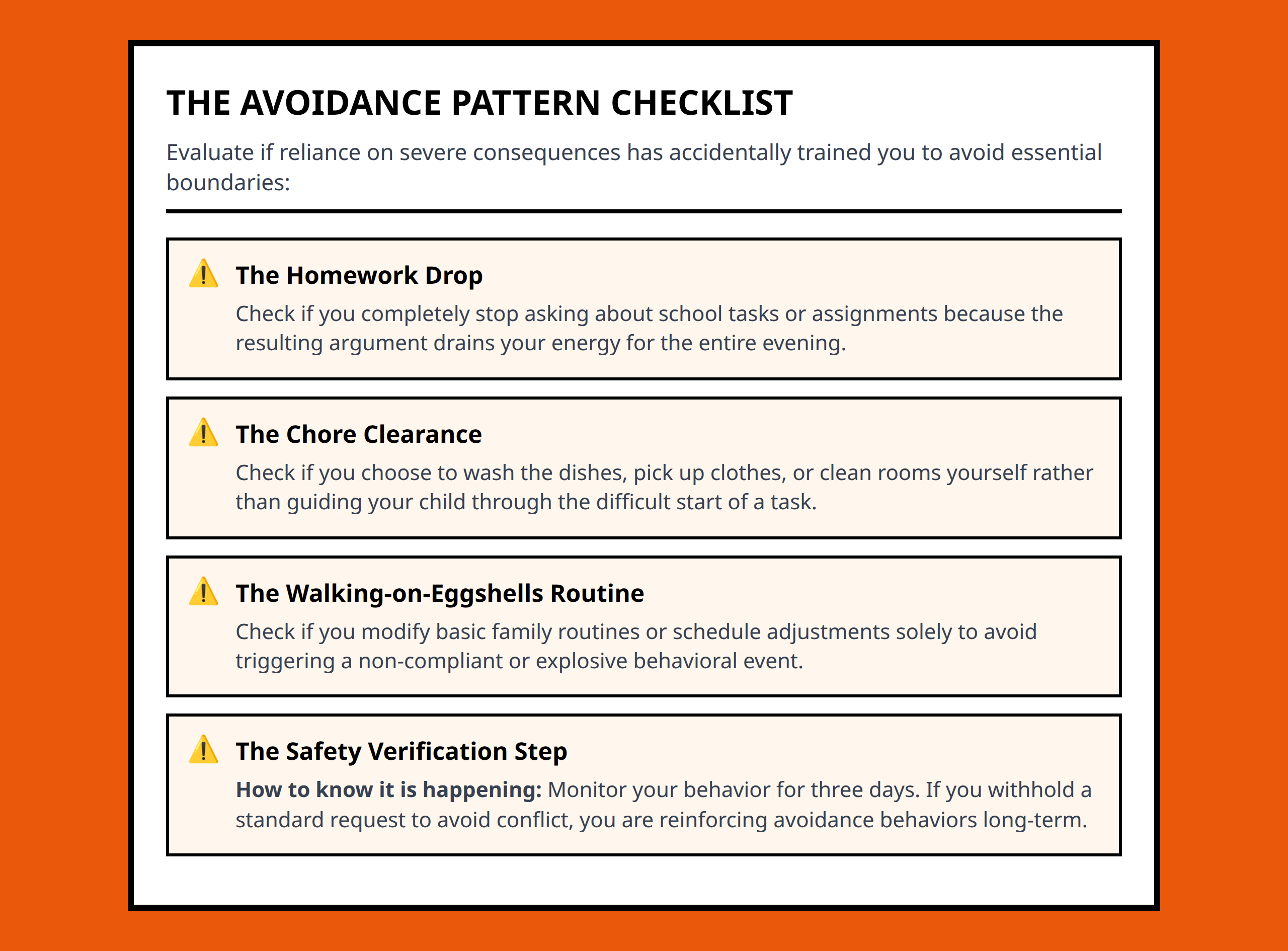
At first glance, rewards and punishments seem effective because they create immediate changes. But over time, they can create unintended patterns in both children and parents.
One common pattern is that parents begin to avoid conflict altogether. If every request leads to arguments, negotiations, or emotional escalation, it can feel easier to stop making requests.
For example, a parent might stop asking a child to do chores because every request leads to resistance. Or they might avoid homework battles by quietly taking over assignments or allowing incomplete work to reduce stress in the moment.
This creates a cycle. The child learns that resistance leads to reduced expectations, and the parent learns that avoiding requests reduces conflict. On the surface, things feel calmer. But underneath, the original skill gaps remain unaddressed.
Another long-term risk is that children become dependent on external systems to regulate behavior. If rewards or punishments are removed, the behavior often returns because the underlying self-regulation skill was never strengthened.
This is not a failure of effort. It is a mismatch between what the system is designed to do (manage behavior) and what the child actually needs (build skills).
Shifting Toward Skill-Based Parenting Approaches
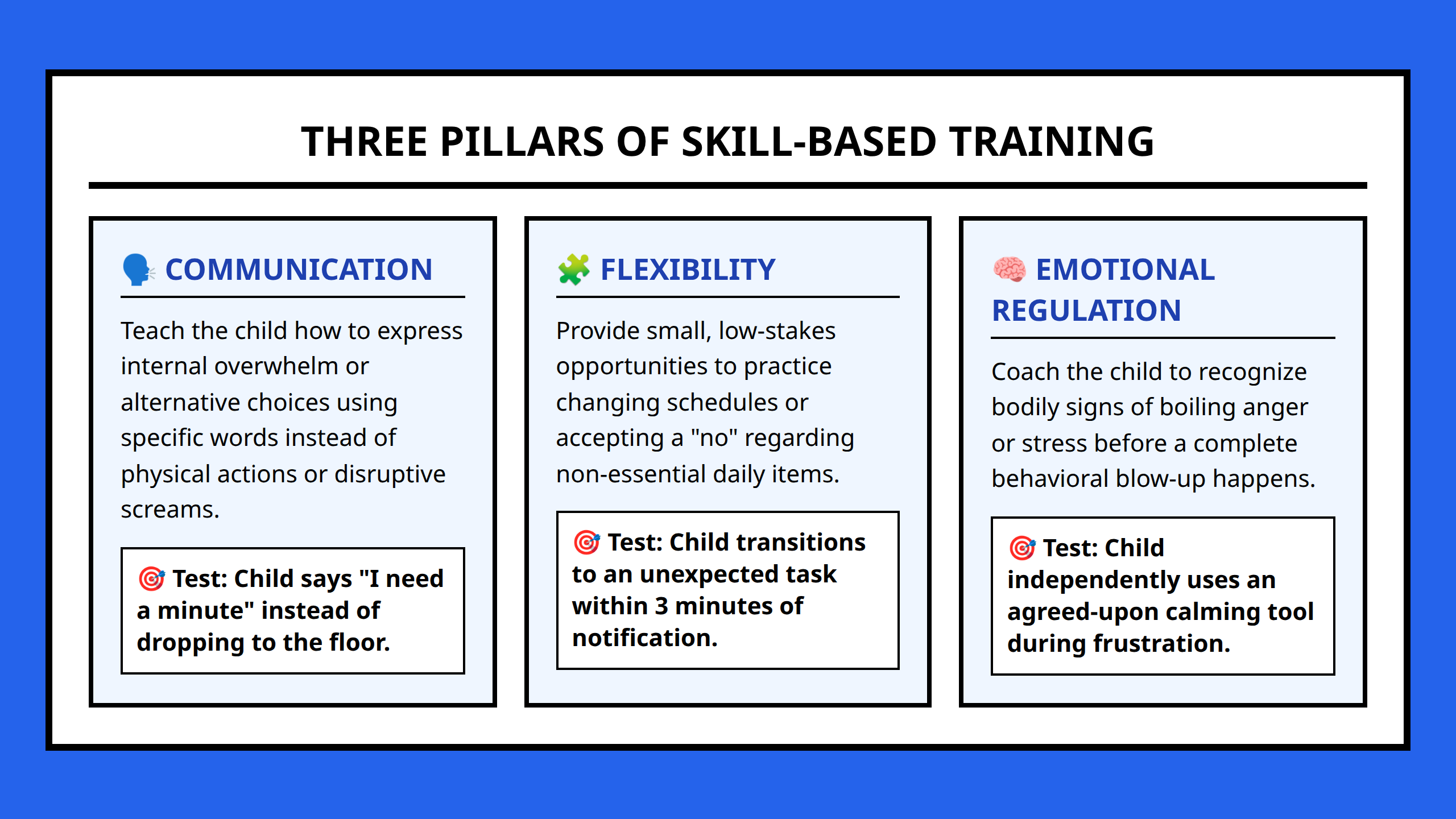
Skill-based parenting focuses on teaching children what to do instead of only controlling what not to do. The goal is to replace missing skills with guided practice, not just consequences.
For example, instead of only saying “no screen time until homework is done,” a parent might break the task into steps and guide the child through starting. This could include sitting with the child for the first five minutes, helping organize materials, or setting a short 10-minute focus timer.
This approach directly targets skills like planning, attention control, and task initiation. Over time, the child begins to internalize these steps and requires less external support.
Another important shift is teaching communication as a replacement for behavior. Instead of reacting to frustration with punishment, parents can model phrases like “I need a break” or “This is hard for me right now.”
Even emotional regulation can be practiced in small moments. For example, during a store visit, a parent might pause and guide the child: “I see you’re upset. Let’s take a breath and decide what we can do instead of yelling.”
The goal is not perfection in the moment. It is repetition of skill-building responses so the child gradually replaces reactive behavior with learned strategies.
FAQ
Key Terms Explained
- Executive Function: Mental skills that help with planning, attention control, emotional regulation, and decision-making.
- Behavior Management: Strategies used to increase or decrease specific actions through rewards or consequences.
- Skill-Based Parenting: An approach that focuses on teaching children the underlying abilities needed for long-term independence.
- Emotional Regulation: The ability to manage emotional reactions in a way that fits the situation.
- Reinforcement: A consequence that increases the likelihood of a behavior happening again.
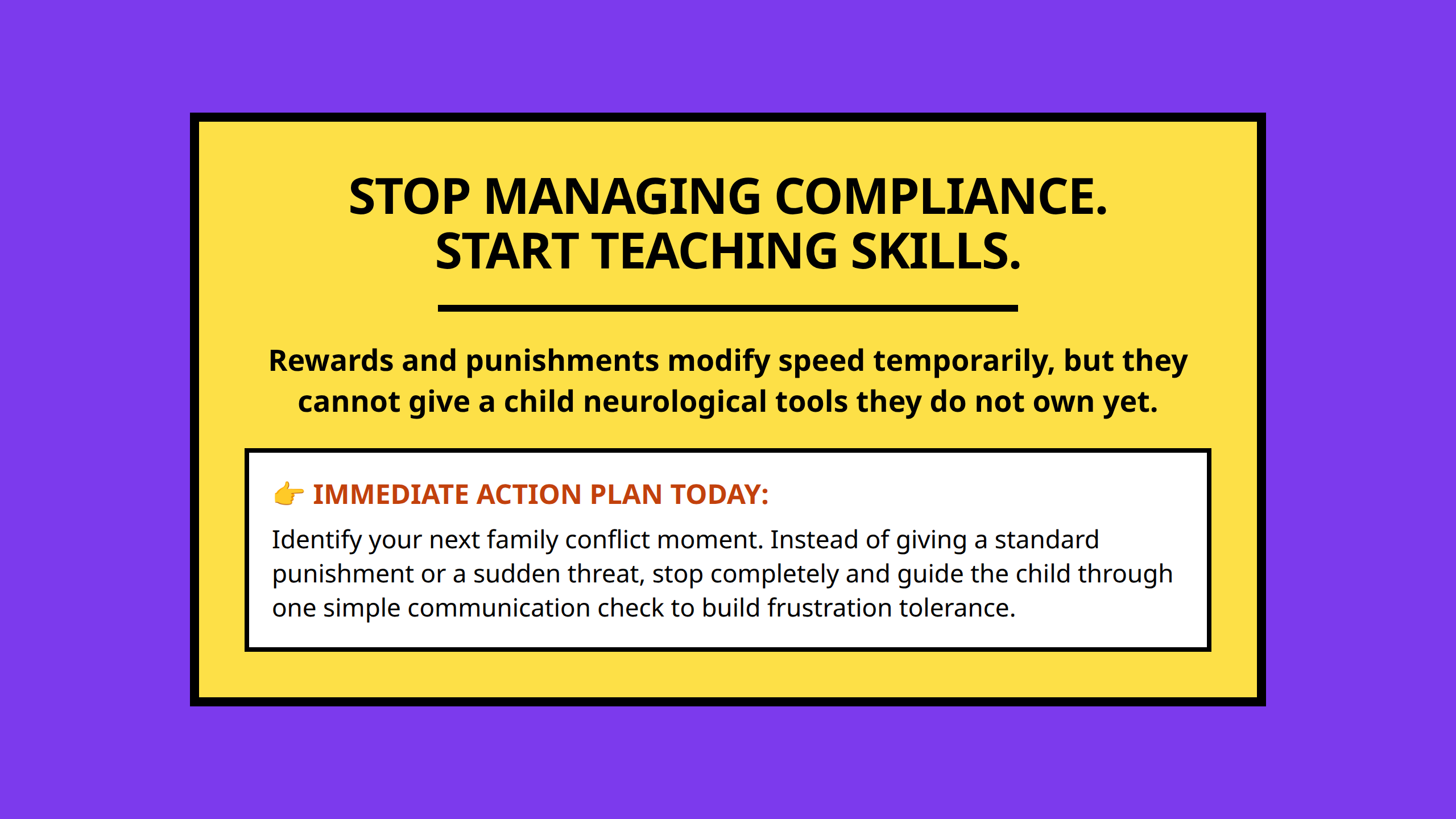
The key shift in ADHD parenting is moving from “How do I stop this behavior?” to “What skill is missing here, and how do I teach it?” That question changes everything about how discipline is understood and applied in daily life.
References:
- https://www.additudemag.com/positive-reinforcement-reward-and-punishment-adhd/
- https://chadd.org/for-educators/how-rewards-and-punishment-work-for-children-with-adhd/
- https://www.adhddude.com/blog/why-consequences-do-not-work-for-adhd-kids
- https://parentmanagementtraininginstitute.com/why-traditional-discipline-doesnt-work-for-kids-with-adhd-or-behavioral-challenges.html
- https://www.reddit.com/r/adhdparenting/comments/1nh4n1f/rewards_and_punishment_in_parenting_training/
- https://www.reddit.com/r/adhdparenting/comments/1l1tjsw/consequences_not_working_for_almost_7_year_old/
- https://www.reddit.com/r/adhdparenting/comments/11of9qu/how_do_you_all_feel_about_rewards/
- https://pmc.ncbi.nlm.nih.gov/articles/PMC7191994/
- https://www.wethrivelearning.com/post/why-don-t-punishments-work-for-my-child-with-adhd
- https://www.theladdermethod.com/blog/rewards-punishment-children-with-adhd
- https://adhdinsighthub.com/children/why-discipline-doesnt-work-for-adhd/
