Epistemic connection helps parents turn individual experiences into shared knowledge. Through advice, discussion, recommendations, and collective learning, parenting communities often become important sources of practical expertise and decision-making support.
Few things feel more overwhelming than trying to make parenting decisions while being surrounded by conflicting advice. One person recommends one approach, another suggests something completely different, and expert opinions can seem just as varied.
What I find useful about epistemic connection is that it explains how people actually navigate this situation. Parents rarely learn in isolation. Instead, they build knowledge through conversations, shared experiences, and ongoing exchanges with others who are trying to solve similar problems.
Takeaways
- Epistemic connection develops through the exchange and creation of knowledge.
- Parents often become valuable knowledge resources through lived experience.
- Communities help people compare perspectives rather than rely on a single source.
- Trustworthy knowledge requires evaluation, not simply acceptance.
- Shared experiences frequently provide the foundation for useful learning and advice.
What Is Epistemic Connection?
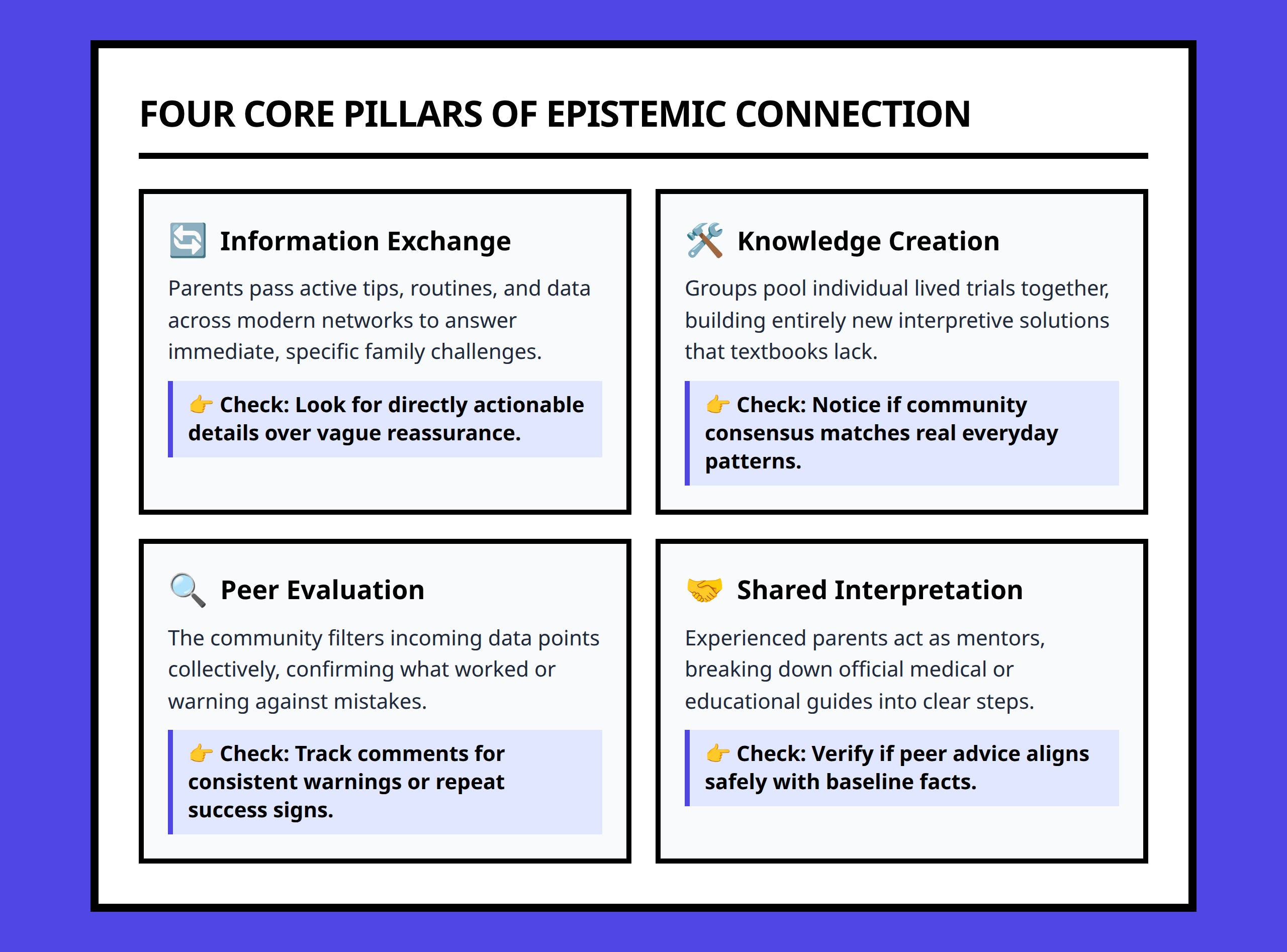
Epistemic connection occurs when people build relationships through the sharing, evaluation, and creation of knowledge.
In parenting communities, these connections form whenever people exchange information, offer recommendations, discuss experiences, or help one another interpret difficult situations. The relationship is strengthened because knowledge is moving between people.
This process goes beyond simply asking questions and receiving answers. Parents often compare experiences, challenge assumptions, test ideas, and refine their understanding through discussion. Knowledge becomes something that is developed collectively rather than delivered by a single authority.
For example, a parent looking for guidance about a family challenge may gather several perspectives from people who have faced similar circumstances. The value comes not only from the answers themselves but from seeing how different people understand and interpret the situation.
That ongoing exchange is the foundation of epistemic connection.
How Parents Become Expert Parents
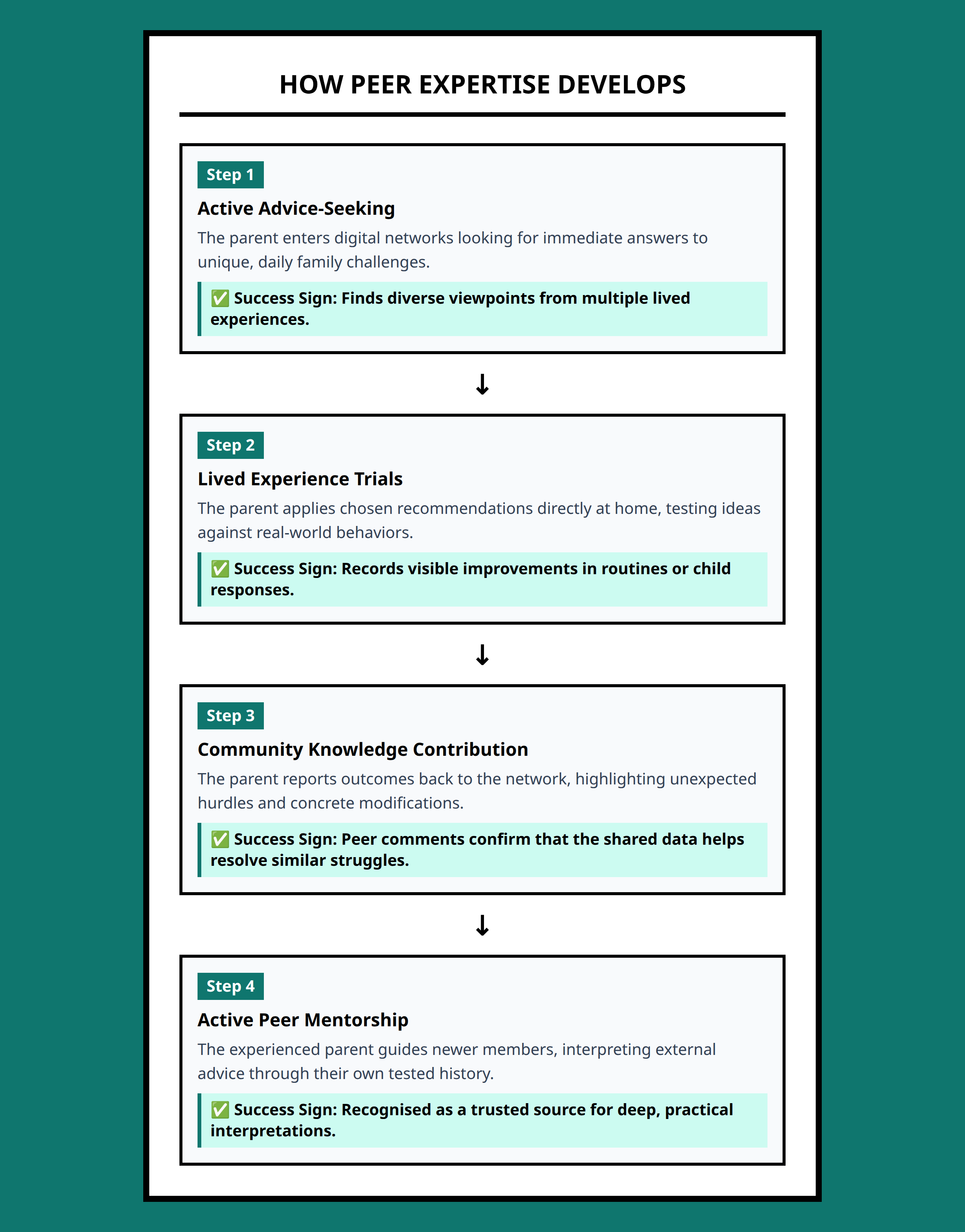
Parents often develop expertise through a combination of experience, observation, learning, and community participation.
One of the most interesting aspects of parenting communities is that expertise is not limited to formal credentials. Practical experience can become a valuable form of knowledge when people reflect on it, discuss it, and share it with others.
Many parents actively seek information, read widely, engage with professionals, and participate in discussions with peers. Over time, these activities help them develop confidence and practical understanding.
Some become trusted voices within their communities because they consistently contribute useful insights, explain complex issues clearly, or help others navigate difficult decisions. Their authority comes from a combination of knowledge, experience, and participation.
An illustrative example might involve a parent who has spent months learning about a particular challenge affecting their family. After gathering information, asking questions, and applying what they have learned, they may eventually help other parents facing similar situations. The knowledge continues to circulate through the community.
This is one reason expertise within parenting networks is often collaborative rather than individual.
How Knowledge Moves Through Parenting Communities
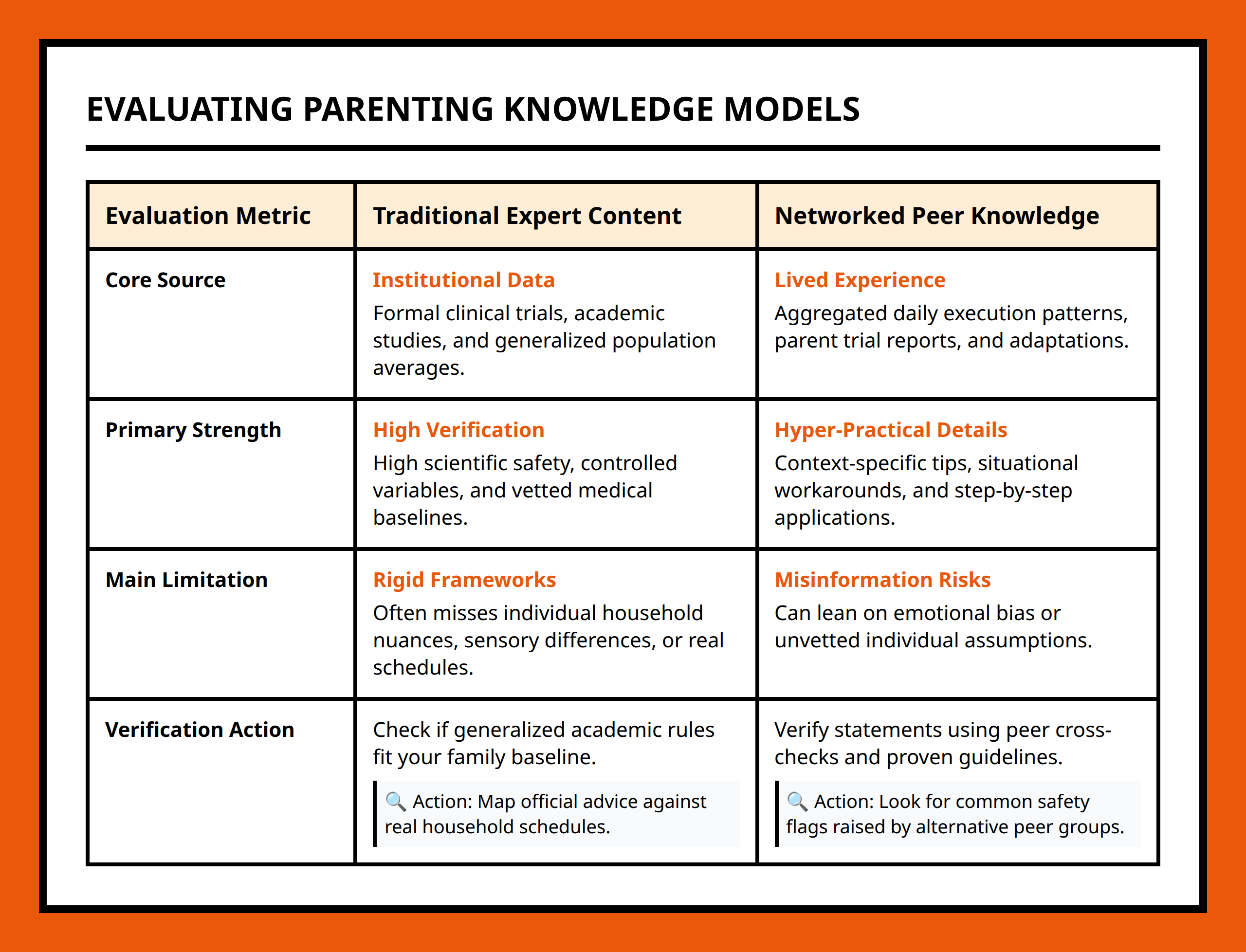
Knowledge sharing works best when communities create opportunities for discussion, interpretation, and practical application.
Parenting communities do much more than distribute information. They provide spaces where people can compare experiences, evaluate recommendations, and discuss what has or has not worked for them.
Knowledge often moves through several stages:
- Someone shares an experience or observation.
- Others contribute perspectives or recommendations.
- Participants compare similarities and differences.
- The community develops a richer understanding of the issue.
This process helps transform individual experiences into practical knowledge resources that others can use.
Importantly, epistemic connection frequently overlaps with collective connection. Shared experiences create trust, and that trust encourages people to exchange knowledge more openly.
Evaluating Information Responsibly
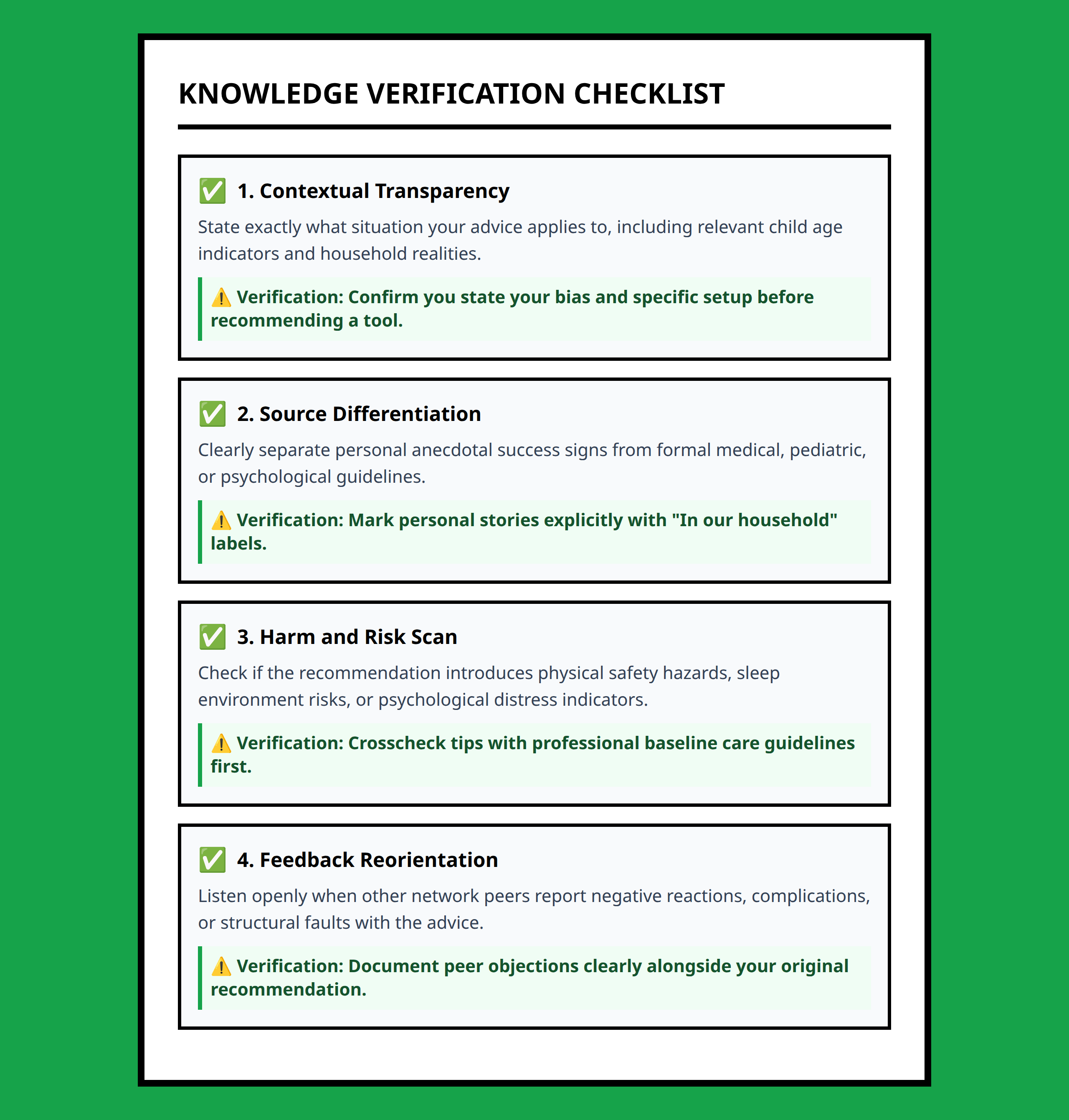
Not all information deserves equal trust, which makes evaluation a critical part of epistemic connection.
Strong parenting communities do not simply encourage knowledge sharing. They also encourage thoughtful assessment of that knowledge.
Parents often look for balanced perspectives rather than one-sided claims. They compare experiences, consider different viewpoints, and remain aware that misinformation can circulate alongside useful advice.
One practical habit is to treat any recommendation as a starting point for reflection rather than an automatic answer. A useful suggestion may still need to be adapted to fit a particular family, situation, or set of circumstances.
Communities are often most valuable when they support both curiosity and critical thinking. Knowledge grows stronger when people feel comfortable asking questions, challenging assumptions, and discussing limitations.
Why Community-Based Expertise Matters

Community-based expertise allows parents to learn from a wider range of experiences than they could access alone.
No individual parent will encounter every situation or develop every form of knowledge. Communities help bridge those gaps by bringing together different experiences, perspectives, and forms of expertise.
This does not replace professional knowledge or formal guidance. Instead, it adds another layer of understanding by connecting practical experience with ongoing discussion and reflection.
What emerges is not a perfect answer for every challenge. It is something more flexible: a network of people helping one another learn, interpret information, and make better decisions.
That is the real strength of epistemic connection. It turns knowledge into a shared resource rather than a private possession.
FAQ

The most useful parenting knowledge is rarely created alone. It develops through conversations, questions, experiences, and careful evaluation. A practical next step is to look at the communities you participate in and ask whether they encourage both knowledge sharing and thoughtful discussion. Strong epistemic connections depend on both.
- Epistemic Connection: A relationship built through the exchange, evaluation, creation, and sharing of knowledge.
- Expert Parent: A parent who develops practical expertise through experience, learning, discussion, and community participation.
- Knowledge Exchange: The process of sharing information, recommendations, experiences, and interpretations with others.
- Community Expertise: Knowledge that develops collectively through contributions from multiple people rather than a single source.
- Misinformation: Information that is inaccurate, incomplete, or misleading, even when shared with good intentions.
References:
- https://www.researchgate.net/publication/373498237_Views_of_Parents_on_Digital_Parenting_Competencies
- https://journals.sagepub.com/doi/10.1177/01902725221130751
- https://norden.diva-portal.org/smash/get/diva2:1265024/FULLTEXT02.pdf
- https://pmc.ncbi.nlm.nih.gov/articles/PMC9857340/
- https://newman.repository.guildhe.ac.uk/id/eprint/17358/1/BNU0005.pdf
- https://stel.pubpub.org/pub/03-03-smith
- https://www.sciencedirect.com/science/article/pii/S2405844024071445
- https://www.cambridge.org/core/books/noncoherence-theory-of-digital-human-rights/epistemic-dimension/650884E482E72773F2717A457BE99BEB
- https://www.tandfonline.com/doi/full/10.1080/1369118X.2018.1518474
- https://uark.pressbooks.pub/edtech/chapter/elearnspace-connectivism-a-learning-theory-for-the-digital-age/
- https://medium.com/@andrewmarcinek/engaging-parents-in-the-digital-learning-journey-5edc4094dd49
- https://www.researchgate.net/publication/391665123_Parental_Mediation_in_the_Use_of_Digital_Media_by_Children_and_Adolescents
- https://peaceathomeparenting.com/technoference-technology-and-parenting/
